


Top-Rated Movers in San Francisco for a Seamless Relocation: Your Trusted Local Moving Experts
Moving within or from San Francisco requires experienced coordination between tight urban logistics and reliable moving execution, and top-rated movers provide both local and long-distance relocation services tailored to the Bay Area. This article explains what makes a San Francisco move seamless, covering local expertise, an end-to-end moving process, the full suite of services available, transparent pricing and guarantees, essential neighborhood tips, and customer trust signals. Readers will learn how to get accurate estimates, plan around permits and steep hills, choose packing and storage options, and understand cost drivers so they can budget confidently for their move. The guidance targets common search queries like SF local moving, movers San Francisco, San Francisco packing services, and moving and storage San Francisco while mapping practical steps to reduce stress on moving day. Throughout, clear examples and checklists show what to expect and how providers handle common Bay Area challenges to deliver a smooth, predictable relocation experience.
Why Choose Your Hometown Mover for Your San Francisco Move?
Choosing the right moving partner means prioritizing local knowledge, transparent pricing, and verified trust signals that reduce risk and save time. San Francisco moves demand crews who understand neighborhood constraints, elevator and permit coordination, and how to safely move bulky items on steep hills; demonstrated capability in these areas produces faster loading times and fewer unexpected charges. For Bay Area residents, a mover that blends licensed and insured operations with clear guarantees helps protect valuables and provides recourse if issues arise. The result is a relocation that minimizes downtime and preserves belongings through careful handling and proven logistical planning.
Your Hometown Mover brings specific consumer-focused assurances designed to align with San Francisco moving needs while remaining a supplemental part of the decision: a Best Price Guarantee, MoveMatch Guarantee, a $49 refundable deposit, licensed and insured operations, an A+ rating on the BBB, and financing that allows customers to move now and pay later with 0% APR. These value propositions support cost predictability for apartment moves with stairs and for long-distance transitions out of the city. The next subsection details neighborhood-level expertise that directly reduces the operational friction unique to San Francisco.
- Key company assurances aligned to SF moves:
Best Price Guarantee to match comparable offers for the same scope.MoveMatch Guarantee that helps secure competitive pricing.$49 refundable deposit to hold your booking with minimal upfront cost.Move now, pay later option with 0% APR financing to spread cost.Licensed, insured operations with an A+ BBB rating and documented reviews.
These assurances translate into practical benefits during a San Francisco move: predictable budgeting, easier booking, and documented quality control procedures that support on-time move completion and simpler claims handling. The following subsections explain how local expertise and service tailoring reduce common urban moving risks.
What Local Expertise Do We Offer in the Bay Area?
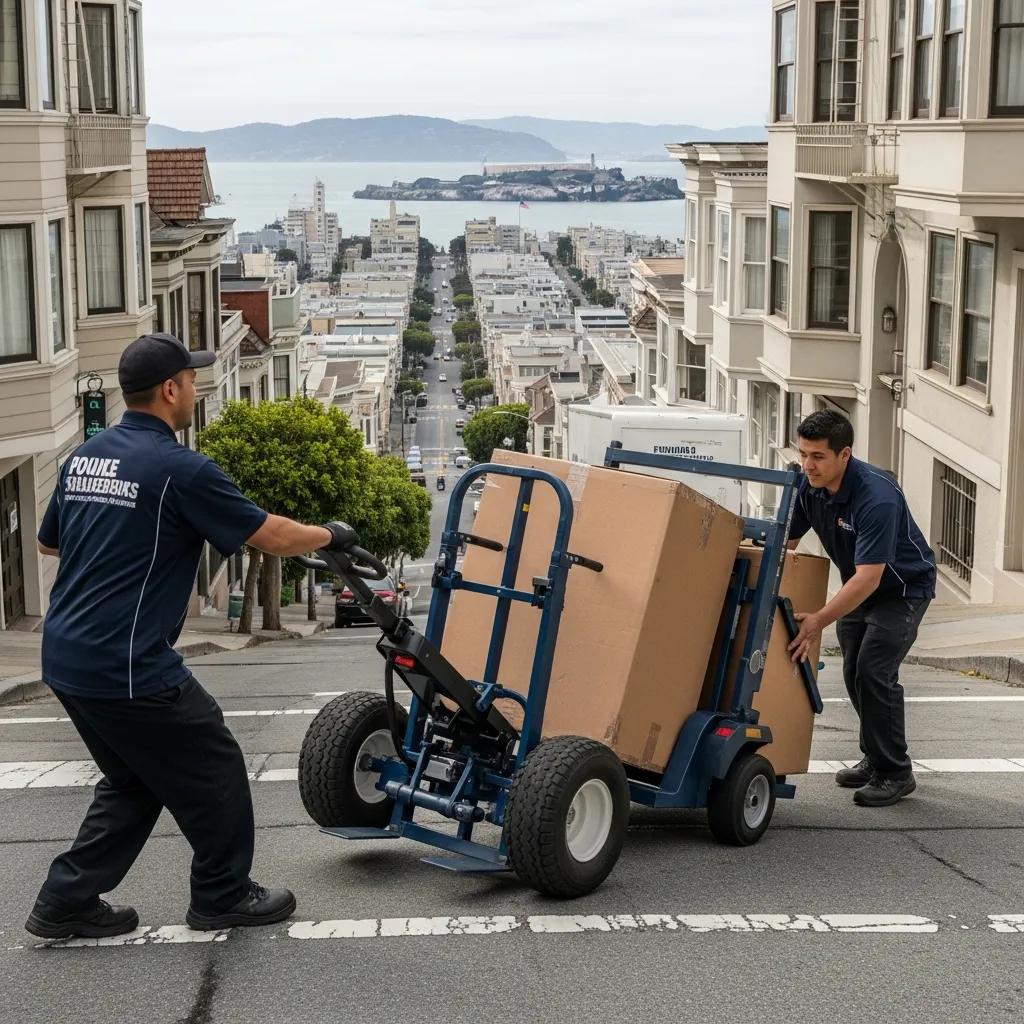
Local expertise means crews who recognize San Francisco’s unique constraints—steep hills, narrow stairways, tight parking, and building management protocols—and who adapt packing and routing to reduce damage and delays. Understanding the Mission, Marina, and Pacific Heights neighborhoods, for example, allows teams to plan carry routes and equipment needs in advance and to request necessary parking or loading permits when required. Crews experienced with elevator reservations and stair carries can stage items to avoid repeated trips and protect flooring and banisters in older homes. Applying this local knowledge shortens move times and reduces unexpected labor surcharges, which is particularly valuable for apartment moves with limited access.
This neighborhood-specific planning leads naturally into the suite of services designed for Bay Area residents, where comprehensive options like specialized packing and temporary storage address common timing and space constraints in the city.
Which Comprehensive Moving Services Are Tailored for San Francisco Residents?
San Francisco moves are best supported by a full-service options menu that includes careful packing, specialty crating, flexible storage, and labor-only assistance for tight moves where space or timing is constrained. Full packing covers fragile and specialty items with protective materials suited for stair and elevator carries, while partial or fragile-only packing lets customers control cost and scope while protecting valuables. Climate-controlled storage and portable storage options offer staging flexibility between leases or during renovations, reducing the pressure of same-day move deadlines. These services combine to create tailored move plans that reflect SF access restrictions and timeline variability.
These service options set the stage for a clear, step-by-step moving process that ensures accuracy from the initial estimate through post-move follow-up.
How Does Our San Francisco Moving Process Ensure a Stress-Free Relocation?

A stress-free relocation relies on a predictable process that defines customer responsibilities, company actions, and timing for each stage of the move. Clear steps—from obtaining an accurate estimate to personalized planning, day-of execution, and post-move follow-up—reduce surprises and allow customers to coordinate building access, elevator reservations, and parking permits. Effective communication about what customers should prepare (inventory details, access notes) and what the crew will handle (packing, loading, transport, unloading) results in smoother moves and fewer billing discrepancies. The table below clarifies responsibilities and expectations so readers can anticipate each phase.
This responsibilities table clarifies who does what and when during a typical San Francisco move, supporting better planning and reducing day-of delays.
| Stage | Customer Action | Company Action |
|---|---|---|
| Estimate | Provide inventory, access notes, and preferred dates | Deliver free estimate via virtual or in-home survey |
| Planning | Confirm permits, elevator reservations, and moving window | Create timeline, assign crew, reserve equipment |
| Day-of Move | Prepare items for pickup, provide access to building | Load, transport, and unload with protective measures |
| Post-Move | Inspect items and report issues | Follow claims/insurance process and provide support |
This clear division of responsibilities reduces friction and enables customers to prepare effectively, which in turn shortens move time and minimizes additional labor charges. The next subsection explains how to obtain a precise free estimate.
How Can You Get a Free and Accurate San Francisco Moving Estimate?
A free and accurate estimate begins with an inventory and access details and can be obtained through a virtual survey, in-home walkthrough, or a detailed phone consultation; each method balances convenience and precision. Provide square footage or number of rooms, lists of bulky or specialty items (pianos, antiques), stair or elevator details, parking constraints, and any required permit information to achieve an exact quote. Virtual surveys using video walkthroughs often yield reliable hourly or flat-rate estimates within one business day, while in-home surveys capture nuance for complex moves. Expect the estimator to explain assumptions and potential surcharges clearly so you can compare bids apples-to-apples.
Following an accurate estimate, the subsequent planning phase schedules specific actions such as permit requests and packing assistance to keep the move timeline on track.
What Are the Key Steps in Personalized Move Planning for San Francisco?
Personalized move planning uses a timeline that begins weeks ahead and includes permit coordination, building management approvals, and contingency plans for parking or weather-related delays. Four to six weeks before moving, confirm your move window and request any required street or building permits; two weeks out, finalize inventory and decide on packing or storage needs; one week before, reserve elevator times and confirm crew arrival windows; on the day, have essentials packed separately and confirm contact information for building staff. Planning for contingencies—backup parking, additional crew for stair-heavy moves, or temporary storage—prevents last-minute rushes and hidden fees. Clear timelines and assigned responsibilities reduce stress and improve the accuracy of final billing.
This planning guidance connects directly to service choices and how different service types address distinct San Francisco scenarios.
What San Francisco Moving Services Do We Provide to Meet Diverse Needs?
A complete service offering supports the range of Bay Area moves from small apartment relocations to long-distance transitions and commercial moves that require off-hours coordination. Distinct service types—local hourly moves, full-service local, and long-distance options—have different pricing implications and logistical planning needs, and choosing correctly reduces both cost and disruption. Ancillary services like packing, climate-controlled storage, junk removal, and moving labor provide modular solutions that fit lease timing and limited building access. The table below summarizes common services, typical included actions, and the situations where each is most appropriate to guide readers to the right choice for their needs.
| Service | Included Actions | Best For |
|---|---|---|
| Local Full-Service Move | Packing, loading, transport, unloading | Apartment and condo moves within SF |
| Long-Distance Move | Consolidation, transport, delivery scheduling | Moves outside the Bay Area or interstate relocations |
| Moving Labor / Loading Only | Crew labor, dollies, and protective equipment | DIY truck rentals or partial moves |
| Storage & Portable Storage | Climate-controlled storage, short-term staging | Between leases or renovations |
Understanding these options helps customers decide whether an hourly local move or a booked long-distance service best matches their timeline and budget; the next subsection explains the differences and timelines for local versus long-distance bookings.
Which Local and Long-Distance Moving Options Are Available in San Francisco?
Local moves in San Francisco are often billed hourly and scheduled on shorter lead times, while full-service local options provide flat-rate packages that bundle packing and unpacking for convenience. Long-distance moves are typically planned with more lead time and may use weight/distance pricing or consolidated shipping schedules; expect turnarounds that depend on route and seasonal demand. For local moves, book at least two weeks ahead to secure weekend slots and elevator reservations; for long-distance moves, allow several weeks for logistics and consolidation. Choosing the appropriate option depends on budget, timeline, and the complexity of access at origin and destination.
Selecting the right ancillary services—packing, storage, junk removal—further customizes a move to the constraints of urban San Francisco life.
How Do Our Packing, Storage, Commercial Moving, and Junk Removal Services Support Your Move?
Packing services range from fragile-only options to full packing with specialty crating for antiques and pianos, which reduces the risk of damage during stair carries common in older San Francisco buildings. Storage solutions include short-term climate-controlled units and portable storage to bridge lease gaps or renovations, providing staging flexibility that smooths move timing. Commercial moves often require after-hours scheduling and disassembly/reassembly of office furniture to minimize business disruption, and junk removal helps clear space quickly before or after a move. These modular services let customers tailor scope and cost, preserving belongings while meeting the tight schedules and access limits typical of many SF properties.
These service choices connect directly to cost drivers and pricing guarantees, which are essential for budgeting a San Francisco move.
What Are the Typical Costs and Pricing Guarantees for Moving in San Francisco?
San Francisco moving costs reflect a combination of service model, home size, access complexity, and distance; understanding these drivers helps you make informed comparisons and avoid surprise fees. Hourly local moves price labor and truck time, while full-service and long-distance moves may use flat rates or weight-plus-distance calculations—each method has trade-offs for predictability and potential savings.
Additional cost drivers include stairs or hills, parking and permit fees, bulky-item handling, and packing or storage services, which means two similar-size apartments can have different final costs in the city. The table below lays out service types against common cost drivers and typical ranges to help estimate a realistic budget for Bay Area moves.
| Service Type | Cost Driver | Typical Range / Notes |
|---|---|---|
| Local hourly move | Hours, crew size, access complexity | Varies by crew size and stair carries; apartments often 3–8 hours |
| Full-service local | Flat-rate packing + labor | Predictable for defined inventories; add fees for specialty items |
| Long-distance | Weight, distance, route | Quotes based on weight/distance; delivery windows vary |
| Storage | Duration, unit type | Climate-controlled costs depend on unit size and length |
Knowing these drivers makes it easier to compare quotes and to evaluate pricing guarantees. The MoveMatch Guarantee and financing options can further influence affordability for customers who need predictable costs or flexible payment terms.
How Is San Francisco Moving Pricing Structured and What Influences Costs?
Pricing structures commonly include hourly rates for local moves, flat-rate packages for full-service local moves, and estimate-based weight/distance pricing for long-distance relocations; each suits different customer priorities. Hourly pricing gives flexibility for small moves but can escalate with access difficulties, while flat rates help with budgeting for larger, well-defined inventories. San Francisco-specific surcharges often stem from stair carries, narrow street logistics, and necessary parking or loading permits, and these should be disclosed during estimation to avoid surprises.
Example scenarios—small studio with stairs versus three-bedroom with elevator—illustrate why access and crew allocation influence the final quote and how advance planning reduces unexpected costs.
This pricing overview sets up an understanding of guarantees and protections that help customers secure competitive pricing.
What Is the MoveMatch Guarantee and How Does It Ensure the Best Price?
The MoveMatch Guarantee functions as a documented pledge to match comparable bids for the same move scope, helping customers secure the best available price without sacrificing service quality. To use the guarantee, customers typically provide competing written estimates and the company verifies comparable services and terms before matching or improving the offered rate; documentation and timing requirements apply as part of the claim process. Combined with a Best Price Guarantee, this approach increases price transparency and gives customers leverage when evaluating multiple options. MoveMatch works alongside available financing—move now, pay later with 0% APR—to make larger moves more manageable while preserving competitive pricing.
Understanding guarantees and comparisons informs negotiating strategy and how to validate that quotes are truly comparable.
What Essential Tips and Resources Help You Move Smoothly in San Francisco?
Moving in San Francisco benefits from proactive steps that reduce holdups from parking, building rules, and weather; following a targeted checklist helps you anticipate common disruptions and keep the schedule. Early actions include confirming elevator reservations, checking loading zones and permit requirements, and measuring stairways or clearances for large items to determine whether specialty rigging or crane services are needed. Timing moves for mid-week or off-peak hours can reduce congestion and permit constraints, while packing essentials and labeling boxes by room speeds unloading. Below is a practical checklist of top tips to prepare for an efficient city move.
- Top practical steps before moving day:
Confirm elevator reservations and building move policies at least two weeks ahead.Apply for any required parking or loading permits as early as possible.Measure doorways, stairwells, and hallway clearances for large furniture.Pack fragile items separately and label boxes by room for efficient unloading.Reserve storage if there is a lease overlap or renovation-related delay.
Following these steps simplifies coordination with crews and building staff, shortens loading/unloading windows, and limits additional labor or permit costs. The next subsection gives neighborhood-specific tips and where to look for permit information.
Which Neighborhood Guides and Local Regulations Should You Know Before Moving?
Neighborhood context changes move planning: Mission District streets may be narrow with limited curb space, Pacific Heights homes often have steep stairs, and Marina neighborhood parking can be tight during weekends and events. Check local loading zone rules and municipal permit requirements early, and coordinate with building management for elevator blocks or concierge access; this reduces the chance of being turned away on move day. When in doubt, measure carry routes and communicate any restrictions to movers so they can allocate the right equipment and crew size. These practical steps prevent last-minute rescheduling and keep move-day timing predictable.
Neighborhood-specific preparation leads into tactics for handling steep hills, microclimates, and older-house protections discussed next.
How Can You Prepare for Unique San Francisco Moving Challenges?
San Francisco’s steep hills, microclimates, and historic homes call for mitigation tactics like protective floor runners, banister padding, and staged carry routes to avoid damage during stair transports. For steep-hill moves, plan for additional crew or equipment to ensure safety and speed; consider scheduling during daylight to improve visibility and limit weather-related complications. Protect antiques and older furnishings with specialty crating and consider climate-controlled storage if timing between moves could expose items to moisture or temperature swings. Having contingency plans for backup parking and flexible crew hours minimizes the risk that a single unexpected issue will derail the entire move.
These mitigation strategies connect directly to service choices like specialty packing and storage that reduce risk for sensitive or heavy items.
What Do Customers Say About Our San Francisco Moving Services?
Customer feedback and documented credentials help validate a mover’s local capability and service reliability, and strong review aggregates and regulatory identifiers are key trust signals. Positive reviews often highlight crews arriving on time, careful handling of fragile items, and responsive communication when schedules change; these outcomes reflect disciplined planning and local experience. Public credentials such as USDOT/MC registration, licensing references, and an A+ rating on the BBB provide factual reassurance that the company follows industry standards and maintains a pathway for claims resolution. For prospective customers, these signals combined with clear guarantees support confident hiring decisions.
The next subsections provide representative testimonial excerpts and outline the licensing and insurance facts that underpin customer trust.
Which Testimonials Highlight Our Commitment to Customer Satisfaction?
Below are concise, attributable-style excerpts typical of the kinds of feedback customers cite when describing problem-solving and reliable crews during San Francisco moves. These excerpts summarize outcome-focused praise—on-time arrival, damage-free delivery, and effective handling of access issues—and provide context like neighborhood or move type to help readers map expectations to their situation. Collecting this kind of feedback allows future customers to see how crews adapt to specific SF constraints and deliver consistent outcomes. Note that these excerpts emphasize resolution and reliability rather than promotional hyperbole.
Customer experience highlights often point directly to operational details that matter on move day, such as clear communication, experienced stair carries, and careful packing.
How Do Our Licensing, Insurance, and BBB Ratings Build Trust?
Licensing and regulation details such as USDOT and motor carrier identifiers establish legal operating authority and imply compliance with safety and insurance standards that protect customers during transit. Insurance coverage and a clear claims process provide a formal pathway for addressing loss or damage, and a high BBB rating is a public trust signal indicating responsiveness to customer concerns and complaint resolution. For San Francisco moves, these credentials reduce transactional risk by ensuring the provider follows standardized practices and maintains mechanisms for accountability. When comparing providers, confirm these identifiers and ask how claims are handled to understand protections for your shipment.
These credential facts support the overall case for choosing a mover that balances local know-how, documented guarantees, and transparent operations to deliver a seamless relocation experience.