


The Complete Guide to Packing & Unpacking for Your Move: Expert Tips and Professional Services
Moving is one of life’s most complex logistics problems, combining time pressure, delicate valuables, and the mental load of starting fresh. This guide defines packing and unpacking as the two coordinated processes that protect belongings in transit and recreate function in the new home, and it shows how to plan, pack, and unpack efficiently to save time, reduce risk, and lower stress. You will learn a practical pre-move checklist, room-by-room packing techniques, fragile-item protocols, prioritised unpacking plans, and criteria for deciding whether to hire professional services. The article also explains how storage, junk removal, and local constraints affect packing choices and offers specific labeling and inventory methods to speed unpacking. Throughout, we use current best practices and actionable lists to help you move more confidently while preserving the condition of your items and simplifying claims or replacement if damage occurs. Read on for step-by-step routines, packing-supply recommendations, and options to match the scale and complexity of your move.
How Do I Prepare Effectively Before Packing for a Move?
Preparation is the foundation of an efficient pack: it identifies what moves with you, what stays behind, what needs special protection, and when you’ll complete each stage. Effective preparation reduces packing time by focusing effort where damage risk or immediate need is highest, and it provides a timeline that coordinates supply ordering, donation pickup, junk removal, and mover reservations. A short planning session clarifies room priorities, the volume of boxes needed, and whether you’ll use self-pack, partial pack, or full pack services. The result is a manageable schedule and a clear inventory that speeds both transit and claims handling if something is lost or damaged, and the next section gives a step-by-step checklist to get started right away.
Follow these numbered steps to begin preparing immediately:
- Create a room-by-room timeline that schedules packing start and completion dates.
- Declutter each room using keep / donate / sell / discard categories.
- Inventory high-value and fragile items with photos and receipts when possible.
- Order or source boxes and specialty supplies at least two weeks before moving.
- Reserve movers, storage, or junk removal services as needed based on your timeline.
This checklist gives a clear first action for each day leading up to moving day and helps you avoid last-minute supply shortages or scheduling conflicts. Completing the inventory and timeline early also enables accurate quotes from movers and better decisions about professional packing.
Different decluttering and disposal choices fit different needs; the following table helps you compare common options so you can decide before you pack.
When choosing how to remove or store things you no longer want in your new home, compare typical speed, ease, and fit for common items.
| Option | Ease/Speed | Typical Items / Use |
|---|---|---|
| Donation | Moderate; requires drop-off or pickup scheduling | Clothing, gently used household goods, small furniture |
| Junk removal | Fast; professional crews haul and dispose same-day or within 24-48 hours | Broken furniture, mattresses, construction debris |
| Storage | Flexible duration; requires packing for long-term | Seasonal items, furniture awaiting new home or staging |
These choices often combine: donate what’s reusable, use junk removal for bulk refuse, and put seasonal or undecided items into storage. Planning decluttering first reduces the total number of boxes to pack and may lower moving costs.
What Are the Best Decluttering and Downsizing Strategies?

Decluttering starts with a simple rule set that turns indecision into action: if an item hasn’t been used in 12 months, consider donating or storing it; if it’s damaged beyond repair, discard or use junk removal. Begin room-by-room to avoid overwhelm, and group items into keep, donate, sell, and discard piles to finalize decisions quickly. For emotionally charged items, use a temporary “maybe” box with a deadline to decide before moving day, which prevents late packing delays and helps family members reach consensus. Using donation pickup services or junk removal for large items speeds the process further and frees up space to pack essentials more efficiently, leading directly into selecting the right moving supplies.
Which Moving Supplies and Boxes Should I Choose?
Choosing the right supplies reduces breakage and packing time: use small boxes for heavy items, medium for books and kitchenware, and large for linens and pillows; specialty boxes like dish pack, wardrobe cartons, and mirror boxes protect specific items. Essential supplies include quality tape, bubble wrap, packing paper, furniture blankets, stretch wrap, labels, permanent markers, and a basic toolkit for disassembly. Eco-conscious movers can opt for recycled boxes or reusable plastic moving bins, which reduce waste and simplify stacking. Estimate box counts by home size—studio (20–30), one-bedroom (40–60), two-bedroom (60–90)—and add specialty boxes based on number of fragile and wardrobe items; final supply planning enables a smoother packing rhythm and limits interruptions on moving day.
What Are the Most Efficient Packing Techniques for a Smooth Move?
Efficient packing follows a few simple mechanical rules: heavy items go in small boxes, fragile items are cushioned and separated, voids are filled to prevent movement, and similar items are packed together for faster unpacking. These techniques reduce damage, optimize truck space, and make loading/unloading more predictable, which is especially useful when coordinating multiple pickups or storage drops. A room-by-room approach—packing less-used rooms first and daily essentials last—keeps your household functional up to moving day. The next subsections describe proven methods for fragile items and labeling systems that accelerate unpacking and claims documentation.
Before the item-specific tips, compare recommended packing methods for common high-risk items below.
| Item Type | Recommended Method | Box Type |
|---|---|---|
| Dishes | Wrap individually in packing paper and stack vertically with padding | Dish pack / small boxes |
| Electronics | Remove batteries, use anti-static wrap, secure cords and document setup | Original box or padded box |
| Artwork | Use corner protectors, acid-free paper, and custom crating for high value | Flat art box or custom crate |
Using the right combination of wrap, box, and orientation minimizes shock and shear forces during transit. These techniques integrate with labeling and inventory systems to ensure fragile items are handled appropriately at each stage.
How Do I Pack Fragile Items Safely?
Packing fragile items relies on layering protection: an inner layer of soft material, a structural filler to prevent pressure, and an outer buffer to absorb shocks. For dishes and glassware, wrap each piece in paper, nest vertically in dish packs with dividers, and add cushioning between layers; for glass and mirrors, use cardboard corner protectors and cross-wrap with stretch film. Electronics need documentation of cables and serial numbers, anti-static protection, and padding to prevent crushing; keeping original boxes when available is ideal. Consider custom crating for high-value artwork, instruments, or antiques—custom crating isolates items from vibration and provides documented packing that simplifies any claims process later.
How Can I Organize and Label Moving Boxes for Easy Unpacking?
An effective labeling system combines room name, short contents list, and priority indicator so boxes are placed in the correct room and opened in the right order. Use color-coded stickers or colored markers per room and number boxes sequentially while maintaining a master inventory spreadsheet that lists box number, room, and major contents. Create a “priority” tag for boxes needed in the first 48 hours, and mark fragile boxes visibly with “FRAGILE” and handling instructions. Digital photos of packed boxes and a quick inventory reduce time spent searching and make any claims or replacements easier by showing initial condition and contents.
How Should I Approach Unpacking to Settle Quickly in My New Home?
Unpacking efficiently means prioritizing livability and safety before aesthetic setup: first-night essentials, beds, and basic kitchen and bath items make the home functional while other rooms can be staged over days. Work room-by-room with daily goals to prevent burnout and use the master inventory to retrieve priority boxes first. Dispose or set aside packing material for recycling or reuse as you go to avoid new clutter, and label donation piles for post-move pickups. The following subsections list first-night essentials and provide a daily unpack schedule that helps you feel at home within days rather than weeks.
Start here with a compact first-night box checklist that keeps essentials at hand and reduces stress on arrival.
What Should I Include in a First Night Box?
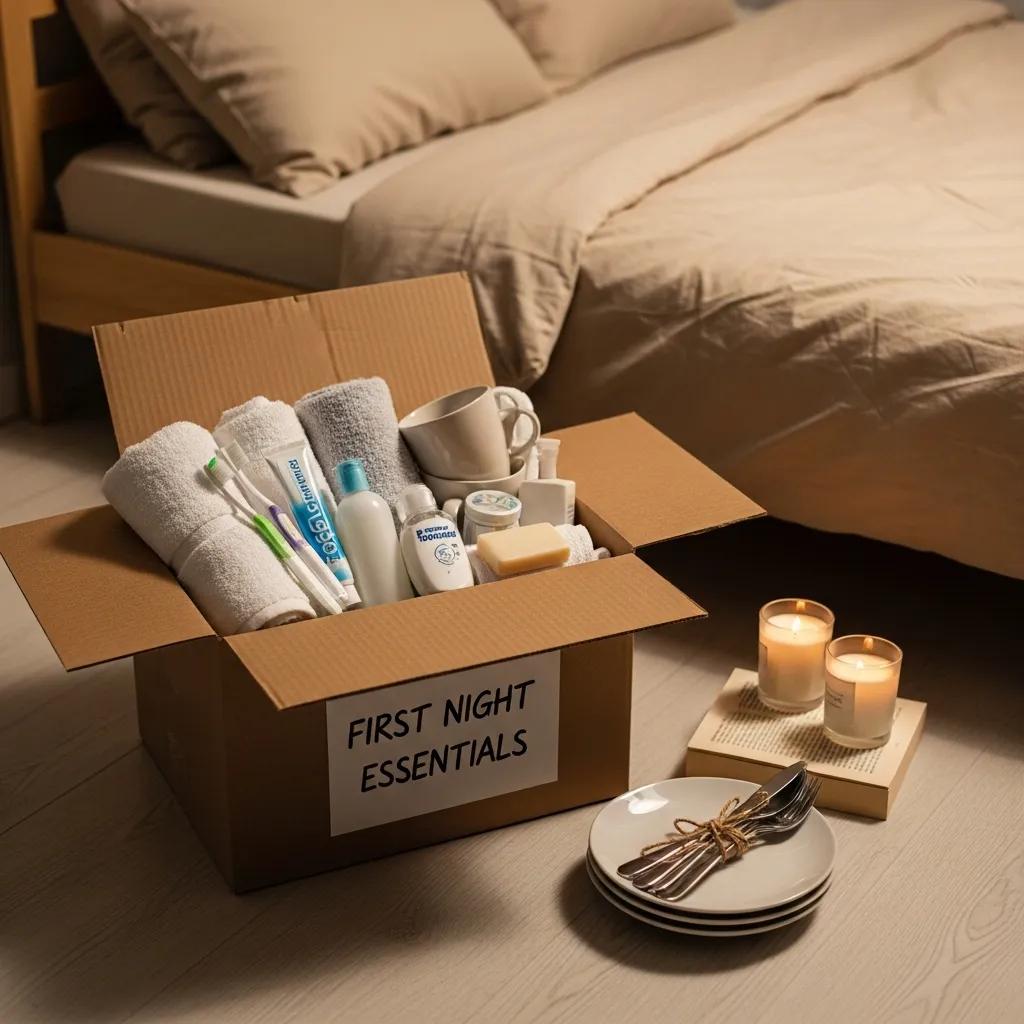
A well-stocked first-night box contains immediate necessities for comfort, hygiene, and basic food prep so you can sleep and eat without unpacking the whole house. Include bedding for each bed, basic cookware and utensils, toiletries and a towel, chargers and a power strip, medications and copies of important documents, and a small cleaning kit for quick surface cleanup. Keep valuables and important documents in a separate, secure bag you carry personally rather than packing them with the household box stock. Pack the first-night box last and load it on the truck last so it is unloaded first, ensuring easy access upon arrival and allowing you to focus on setting up key areas like bedrooms and bathrooms.
What Are the Best Strategies for Efficient Unpacking and Post-Move Organization?
Efficient unpacking uses a prioritized schedule that targets essential rooms first, assigns daily box limits to prevent fatigue, and establishes storage systems early to prevent overflow. Start by setting up beds and bathrooms, then the kitchen for meal prep, and follow with work or study areas; postpone decorative setups until essentials are in place. Recycle or break down boxes daily and set aside donations to avoid the temporary clutter that can stall progress. If time or physical constraints are limiting factors, consider hiring unpacking help to stage rooms quickly and remove materials, which shortens the time to full functionality and reduces unpack-related stress.
Here are three practical unpacking priorities to follow in order:
- Sleep and Hygiene: Set up beds and bathrooms to ensure rest and personal care.
- Food and Medication Access: Unpack kitchen basics and medicine to cover immediate needs.
- Work and Safety: Assemble any essential workspaces and secure valuables for ongoing use.
When and Why Should I Hire Professional Packing and Unpacking Services?
Hiring professionals can be a strategic choice when time, scale, or value of items make DIY packing impractical; professional packing offers speed, trained handling, and materials that reduce damage risk. Evaluate your move by considering distance, the presence of high-value items requiring custom crating, household size, and whether your schedule demands expedited service. Professionals often include materials, trained packers, and claims processes that simplify recovery if damage occurs; comparing self-pack, partial pack, and full pack options clarifies which level matches your budget and risk tolerance. Below is a concise comparison table to help you decide quickly.
Compare service options side-by-side to match need with the right level of support.
| Service Option | What’s Included | Best For |
|---|---|---|
| Self-Pack | Labor only or moving labor without materials | Budget-conscious, want full control |
| Partial Pack | Packers handle high-value/fragile items | Time-constrained households with some DIY capacity |
| Full Pack | Full materials, packing, and unpacking options | Long-distance moves or high-value inventories |
This comparison highlights that full-pack services suit complex or long-distance moves, partial-pack balances cost and protection, and self-pack works for local, simple relocations; the right choice depends on time, risk tolerance, and item value.
What Are the Benefits of Full, Partial, and Self-Pack Options?
Full-pack services save the most time by providing materials, professional packing, and unpacking, and they reduce handling errors through trained techniques and standardized packing protocols. Partial pack lets you control low-risk items while professionals secure fragile, heavy, or complex pieces, offering a middle ground of cost and protection. Self-pack is the most economical option where you accept the time and responsibility of packing, but it may increase risk for fragile or high-value items unless you follow strict packing methods. Choosing between these options requires weighing the time you can commit, the value of items, and the consequences of potential damage or delayed unpacking.
How Do Professional Services Reduce Moving Stress and Protect Valuables?
Professional packers reduce stress by managing logistics, supplying appropriate materials, and applying consistent methods that protect items from common transit hazards like crushing and vibration. Custom crating for artwork or unique instruments provides structural protection beyond standard boxes, while trained crews disassemble and reassemble furniture safely to avoid damage or lost hardware. Reliable movers also manage claims and documentation, simplifying recovery if damage occurs, and their experience shortens move windows so you spend less time coordinating. For those needing these protections and conveniences, professional services can justify their cost by preventing losses and accelerating the timeline to a functional home.
After considering the decision framework, note a concise overview of professional services available from a local full-service provider. Your Hometown Mover offers self-pack, partial pack, and full pack options, plus unpacking choices from self-unpack to full-unpack with disposal of materials to match customer needs. They provide custom crating for fragile, high-value items and discounted packing supplies to reduce out-of-pocket costs when professional packing is selected. The company also supports customers with a MoveMatch Best Price Guarantee, an Easy Claims Process, and financing labeled “Move Now, Pay Later” with 0% APR to help spread cost; a refundable deposit option is available to reserve moves. These service features illustrate how providers can combine materials, trained staff, and financial flexibility to make professional packing a viable solution for complex moves.
How Can I Optimize My Move with Local Insights and Additional Services?
Local factors—seasonal weather, narrow streets, parking restrictions, and donation pickup options—directly influence packing choices, truck size, and scheduling. Optimizing a move means planning for local permit needs, considering winterizing or weatherproofing for cold/wet months, and knowing nearby donation or recycling centers to expedite decluttering. Complementary services such as junk removal and short-term storage enable staged moves where you clear space and move essentials first, then retrieve remaining items later. The following subsections detail local constraints for places like Kingston and the Hudson Valley and outline when to use junk removal versus storage to streamline the overall timeline.
What Local Factors Affect Packing and Moving in Kingston NY and Hudson Valley?
In the Hudson Valley and Kingston area, seasonal rain, snow, and variable road access increase the importance of weatherproof packing and timing moves outside severe storms when possible. Narrow historic streets or limited curb space in older towns may require smaller trucks, additional carry fees, or permit coordination; plan packing and disassembly accordingly to reduce trip counts. Local donation centers, municipal recycling rules, and charity pickup schedules affect when you can donate large items and how quickly they will be removed. Understanding these local logistics allows you to pack with realistic assumptions about truck access and to schedule junk removal or storage pickups on dates that fit municipal constraints.
How Do Junk Removal and Storage Services Complement Packing and Unpacking?
Junk removal and storage services form a flexible workflow—declutter to reduce volume, junk-remove items for fast disposal, and use storage to hold items temporarily while you stage or furnish the new home. Discounted packing supplies and supply delivery reduce trips to supply stores and make staged packing more efficient by ensuring you have the right materials on schedule. If you want assistance combining these services with professional packing and unpacking, providers can coordinate pickups and staging to compress the overall timeline and lower moving-day complexity.
A practical workflow for integrating declutter, junk removal, and storage looks like this:
- Declutter room-by-room and decide donate/sell/keep/discard.
- Schedule junk removal for unsellable bulk items and donation pickups for reusable goods.
- Move staged essentials first and transfer stored items as you finalize room layouts.
These coordinated steps let you control costs, reduce the number of boxes to pack, and give you breathing room to make placement decisions after moving day. For households seeking bundled solutions, local full-service moving providers can combine these options so packing, storage, and disposal are handled in a single coordinated plan.
Final practical steps and booking note
If you prefer professional coordination, remember that providers often include options like discounted supplies, custom crating, and financing tools designed to smooth upfront cost. When you’re ready to compare quotes or reserve a move, consider providers that offer clear packing options, transparent deposit policies, and an easy claims process to protect your investment.
Frequently Asked Questions
What should I do with items I can’t take with me during the move?
Items you can’t take can be managed through several options. Consider donating gently used items to local charities or shelters, which can help those in need. For broken or unusable items, junk removal services are a quick solution, often providing same-day service. If you have items that you may need later, such as seasonal decorations or furniture, consider renting a storage unit. This allows you to keep your belongings safe until you’re ready to retrieve them, reducing clutter during your move.
How can I ensure my moving day goes smoothly?
To ensure a smooth moving day, start by confirming all arrangements with your moving company a few days prior. Create a detailed schedule for the day, including when to load the truck and when to arrive at your new home. Prepare a first-night box with essentials like toiletries, bedding, and snacks to avoid rummaging through boxes. Additionally, communicate with your movers about any specific instructions or concerns, and ensure that all necessary paperwork is ready to avoid delays.
What are the best practices for packing electronics?
Packing electronics requires careful attention to prevent damage. Start by removing batteries and securing cords with ties or tape. If possible, use the original packaging, as it is designed to protect the item. If the original box is unavailable, wrap the electronics in bubble wrap and place them in a sturdy box with padding. Label the box as “FRAGILE” and keep a list of all items packed to ensure everything is accounted for upon arrival at your new home.
How can I handle valuable items during the move?
For valuable items, such as jewelry, important documents, or collectibles, consider transporting them personally rather than packing them with the rest of your belongings. Use a secure, padded bag or a small safe to keep these items safe during transit. If you must pack them, ensure they are well-protected with bubble wrap and labeled clearly. Additionally, consider taking photos and keeping receipts for insurance purposes, which can be helpful in case of loss or damage during the move.
What should I do if something gets damaged during the move?
If an item gets damaged during the move, the first step is to document the damage with photos and notes. Check your moving contract to understand the coverage provided by the moving company. Most professional movers offer some form of liability coverage, which may include full value protection or released value protection. Contact the moving company as soon as possible to file a claim, providing them with the necessary documentation to support your case for compensation or repair.
How can I make unpacking more efficient?
To make unpacking more efficient, start by prioritizing essential rooms, such as the kitchen and bedrooms, to ensure you can function comfortably right away. Set daily goals for unpacking a specific number of boxes to avoid feeling overwhelmed. Use your labeling system to quickly identify where each box belongs. Additionally, recycle packing materials as you go to keep your space organized and clutter-free. Consider enlisting help from friends or family to speed up the process and make it more enjoyable.
What are the benefits of hiring professional unpacking services?
Hiring professional unpacking services can significantly reduce stress and save time. Trained professionals can efficiently unpack and organize your belongings, ensuring that fragile items are handled with care. They can also help set up furniture and other essentials, allowing you to settle into your new home more quickly. Additionally, professional unpackers often have the experience to optimize space and organization, which can enhance the functionality of your new living environment. This service is especially beneficial for those with busy schedules or large households.
Conclusion
Efficient packing and unpacking can transform a stressful move into a streamlined experience, ensuring your belongings are protected and organized. By following expert tips and utilizing professional services, you can save time and reduce the risk of damage, making your transition smoother. Embrace the benefits of a well-planned move and consider how local insights and additional services can further enhance your experience. Start planning your move today and explore our range of professional moving solutions to make your relocation effortless.