
Table of Contents
ToggleYour Long-Distance Moving Planning Guide: Cross-Country Success

Your Long-Distance Moving Planning Guide: Cross-Country Success with Expert Tips and Checklists
Long-distance moving, also called cross-country relocation, involves transporting household goods over state lines and requires coordinated logistics, timing, and clear budgeting to succeed. This guide delivers a practical interstate move guide that walks you through planning timelines, packing strategies, cost breakdowns, company selection criteria, moving-day logistics, and post-move organization so you can reduce uncertainty and avoid common pitfalls. Many households underestimate weight-based fees, transit windows, and specialty-item handling, which creates stress and unexpected expense; this article provides concrete steps to prevent those outcomes. You will find a step-by-step timeline, actionable checklists, packing and fragile-item safeguards, a clear expense table for budgeting, guidance on verifying mover credentials, and tips for settling into your new home. Throughout, semantic concepts like cross country logistics, long distance planning, and moving storage solutions are woven into pragmatic how-to advice so you can plan an interstate move with confidence and clarity. The next section begins by mapping essential planning steps and the ideal timeline for an interstate move.
While this guide focuses on cross-country moves, understanding the differences from local moving services can help clarify logistics and cost structures for any relocation type.
How Do I Plan an Interstate Move: Essential Steps for Cross-Country Success?
Planning an interstate move means organizing tasks, timelines, and vendor coordination so your household goods travel safely and arrive on schedule. Effective planning reduces cost surprises by aligning decluttering, accurate inventorying, and early carrier estimates with your preferred delivery windows. The main benefit of a staged plan is predictability: a clear timeline produces better quotes, improved packing outcomes, and fewer last-minute decisions. Start by establishing target move dates, estimating volume, and researching long distance moving companies to obtain binding or non-binding estimates. These preparations set up the next detailed timeline where specific weekly milestones translate into completed tasks and vendor confirmations.
What follows is a concise week-by-week timeline to translate high-level planning into concrete actions that trigger the right services and resources at the right time.
- Eight to twelve weeks before move: Research movers, request multiple written estimates, and begin decluttering to reduce weight-based costs.
- Four to six weeks before move: Confirm your mover, arrange packing services for specialty items, and collect packing supplies for DIY segments.
- One to two weeks before move: Finalize inventory, prepare an essentials kit for transit and arrival, and confirm logistics with your moving coordinator.
These timed milestones make it easier to assign tasks and communicate with service providers about packing services and storage solutions, which naturally leads into creating a custom moving checklist tailored to your household.
What Is the Ideal Timeline for Planning a Long-Distance Move?
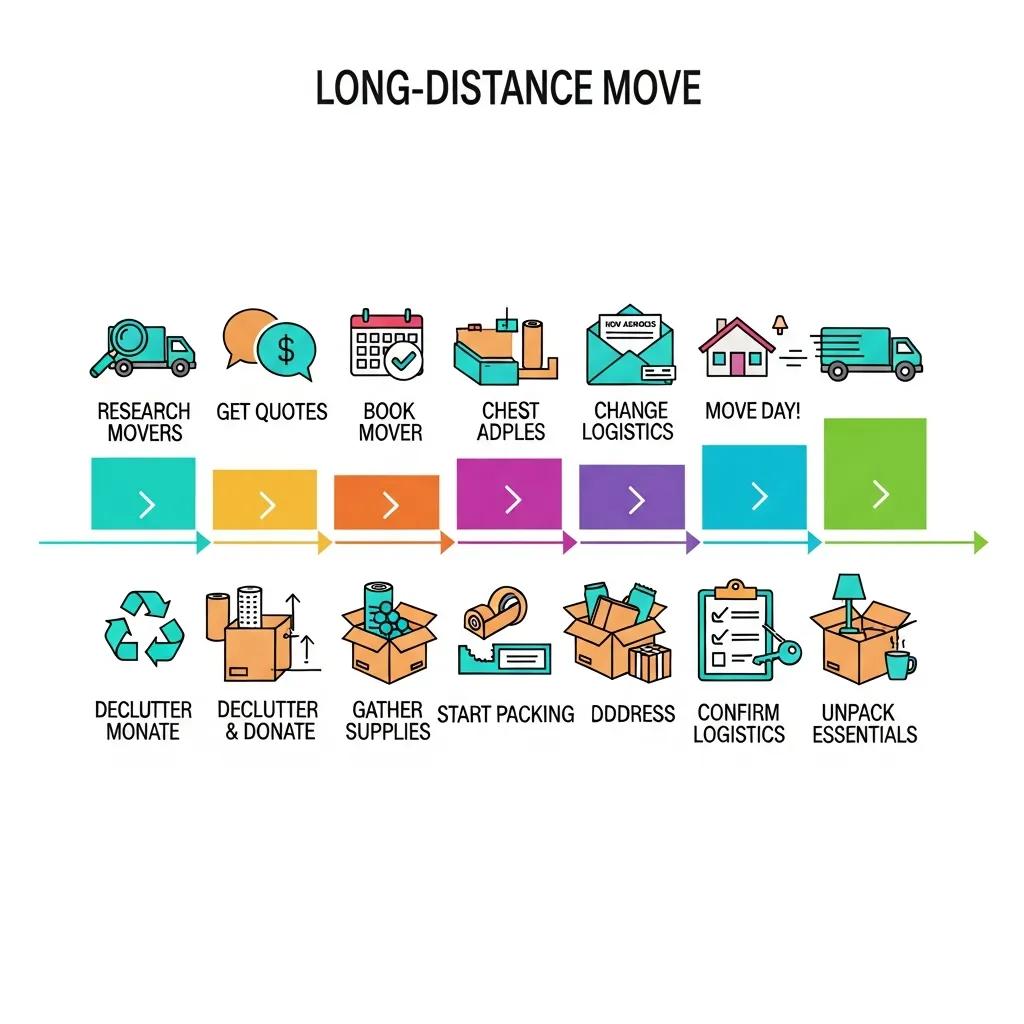
The ideal long distance moving timeline begins 8–12 weeks before moving day and progresses through confirmation and final-prep stages, which balances time for quotes with packing and logistics tasks. Early weeks are best for researching cross country moving costs, securing initial estimates, and deciding whether to downsize or sell items to lower weight-based charges. Mid-stage work focuses on booking services such as full-service long-distance moving, scheduling any required vehicle transport, and ordering specialty packing materials for fragile possessions. Final weeks emphasize labeling, confirming insurance or liability coverage levels, and creating an essentials kit for the first 48 hours after arrival. Completing these steps on schedule reduces last-minute surcharges and ensures the moving coordinator has accurate information for transit planning.
To make this timeline actionable, the table below assigns tasks to weeks and links each task to required services or resources that help you stay organized.
| Task | Suggested Timing (weeks before move) | Required Service/Resource |
|---|---|---|
| Research and request quotes | 8–12 weeks | Multiple moving estimates, mover verification checklist |
| Declutter and sell/donate | 8–10 weeks | Donation pickup, online marketplaces |
| Book mover and optional packing services | 4–6 weeks | Binding estimate, packing service schedule |
| Pack non-essentials | 4–3 weeks | Boxes, padding, specialty crates |
| Confirm logistics and essentials kit | 1–2 weeks | Inventory, BOL review, essentials suitcase |
This structured timeline clarifies when to take each step and prepares you for the detailed packing and logistical tasks that follow in the next section.
What Are the Best Long Distance Moving Tips to Ensure a Stress-Free Move?
Long distance moving tips focus on reducing damage risk, improving packing efficiency, and ensuring clear communication during transit for a less stressful relocation. A room-by-room packing approach paired with a consistent labeling system saves time during unpacking and prevents misplaced items. Protecting fragile and specialty items requires targeted materials and, when appropriate, professional crating or white-glove services to manage high-value or irregular-shaped goods. Preparing a well-organized essentials box for the first 48 hours after arrival dramatically reduces friction during unpacking and settling in. These practical tips flow naturally into more specific instructions on protecting fragile items and selecting the right packing supplies for an interstate move.
Below are proven tips to minimize stress and damage when moving across state lines.
- Pack room-by-room and label each box with contents and destination room to speed unpacking and maintain context.
- Create an “open first” essentials box with toiletries, basic kitchen items, medications, and important documents for immediate access.
- Use mattress covers, corner and floor protection, and proper padding to prevent common transit damage during loading and unloading.
These strategies work together to reduce risk and save time, and the next subsection outlines specific protective methods for fragile and specialty items.
How Can I Protect Fragile and Specialty Items During a Cross-Country Move?
Protecting fragile items begins with selecting the right materials—double-walled boxes, bubble wrap, foam, and rigid crates—and using packing techniques that isolate movement and absorb shock. For artwork, pianos, or antiques, professional crating or white-glove handling reduces liability and mitigates the risk of damage during long transit; these services often include corner and floor protection and customized padding. Declaring the value of high-worth items and choosing appropriate insurance or premium furniture protection helps ensure coverage during claims processing. When specialized handling is required, coordinate with your moving coordinator early so the carrier plans for crating, liftgate service, or vehicle transport if needed.
Careful protection methods complement packing supplies planning, which is addressed next with recommended quantities and sustainable options.
What Packing Supplies and Essentials Should I Prepare for an Interstate Move?

Preparing a complete set of packing supplies—boxes in a range of sizes, sturdy packing tape, cushioning materials, furniture pads, and specialty crates—lets you pack efficiently and protect items for long-distance transit. Estimate box counts by room size and inventory complexity; common guidelines include 20–30 boxes for a studio, 100–150 for a three-bedroom home, adjusting for heavy items and wardrobe needs. Include eco-friendly options such as reusable plastic moving bins and recycled paper padding when possible to reduce waste and simplify unpacking. Also assemble essentials for the first 48 hours: bedding, basic cookware, toiletries, chargers, and essential documents in a labeled, easily accessible bag.
- 12–24 small boxes for books and kitchen goods.
- 10–20 medium boxes for miscellaneous household items.
- 8–15 large boxes or wardrobe boxes for linens and clothing.
- Protective materials: bubble wrap, furniture pads, corner protectors, heavy-duty tape.
- Essentials kit: medicine, chargers, documents, basic cookware, bedding.
Using the right supplies minimizes breakage risk and speeds both packing and unpacking, feeding directly into accurate budgeting for the move.
How Do I Budget for a Cross Country Move: Understanding Costs and Financing Options?
Budgeting for a cross country move requires understanding weight- and distance-based transportation fees, optional service costs like packing or storage, and contingency funds for lodging or unexpected delays. Major cost drivers include the mover’s service level (door-to-door vs terminal), shipment weight, distance, seasonality, and any required specialty handling like crating or vehicle transport. Planning early to reduce volume through decluttering and choosing appropriate insurance levels helps control costs. Transparent quotes and a clear breakdown of expenses reduce surprises and support comparison shopping among full-service long distance moving providers. The following expense table uses an estimated cost range to present typical cost ranges and variables so you can build a realistic budget.
| Expense Category | Typical Cost Range | Notes/Variables |
|---|---|---|
| Transportation (weight & distance) | $2,000–$8,000 | Varies by weight, distance, season |
| Packing services & supplies | $200–$2,000 | Depends on DIY vs full packing and specialty crating |
| Insurance & declared value | $0–$1,500+ | Basic liability often low; premium protection costs more |
| Lodging & incidental travel | $100–$1,000+ | Depends on travel distance and family size |
| Storage solutions | $50–$500/month | Short-term holds may reduce scheduling pressure |
This breakdown clarifies where money typically goes and highlights the levers you can use to reduce cost, such as reducing shipment weight or choosing selective packing services. Next, financing options can help manage cash flow around deposits and payment schedules.
What Are the Typical Costs Involved in a Long-Distance Move?
Typical long-distance move costs combine base transportation fees with add-ons such as packing labor, crating, liability coverage, and special handling fees; weight and distance often dominate the final price. For an average household, transportation can range from a few thousand dollars to the high end depending on total shipment weight and route congestion during peak season. Packing services add predictable hourly or flat rates, while premium protection options raise the insurance cost but lower out-of-pocket risk for high-value items. Lodging and travel expenses for families that drive in parallel should also be budgeted. Building a transparent, itemized estimate from moving companies helps identify where to negotiate or trim services.
Understanding these typical costs sets the stage for deciding whether financing makes sense for your cash flow needs.
How Does Move Now, Pay Later Financing Help Manage Moving Expenses?
Move Now, Pay Later financing provides a way to book moving services immediately while spreading payments over time, often with promotional 0% APR periods that ease upfront cash constraints. This financing option is useful when deposit requirements or total moving costs would otherwise delay scheduling, allowing you to lock in a price and delivery window without large immediate outlays. Typical financing terms include a refundable deposit—sometimes a modest amount such as $49—to secure a booking, followed by scheduled payments; eligibility and terms vary by provider. For readers balancing timing and cost, applying financing can preserve your moving timeline without sacrificing necessary services, and you should compare terms carefully to ensure it aligns with your budget.
After budgeting and financing considerations, the logical next step is selecting a reputable mover using clear credential checks.
How to Choose the Best Cross Country Moving Companies for Your Interstate Move?
Choosing the best cross country moving company requires verifying credentials, comparing service features, assessing reviews, and understanding estimate types to avoid surprises. Key credentials include USDOT and MC numbers, state registrations, and recognized consumer ratings; these identifiers verify that a carrier is authorized for interstate transport and subject to regulatory oversight. Evaluate insurance and liability offerings alongside technology features like live GPS tracking, and ask about delivery windows and binding versus non-binding estimates. A clear vetting process helps you prioritize providers that offer transparent pricing, customer communication, and the specific services you need for a door-to-door interstate move.
The next subsection provides a credentials table to help you evaluate potential movers effectively.
Before the table, here are common decision criteria you should check when vetting companies.
- Verify USDOT and MC numbers to confirm legal authority for interstate moves.
- Review state-level registrations such as NYDOT where applicable for added compliance.
- Consider customer ratings like Better Business Bureau scores and independent reviews to assess reliability.
These checks streamline selection and lead naturally to a deeper explanation of what each credential means and why it matters.
| Credential/Feature | What It Means | Why It Matters |
|---|---|---|
| USDOT / MC number | Federal registration for interstate carriers | Confirms legal authority and regulatory oversight |
| State DOT registration (e.g., NYDOT) | Additional state-level compliance | Ensures adherence to local rules and standards |
| BBB rating (A+) | Independent review of complaints and business practices | Signals trustworthiness and customer service history |
| Live GPS tracking | Real-time shipment location updates | Improves transparency and ETA accuracy |
| MoveMatch Guarantee | Price-match or best-price assurance | Reduces price uncertainty during comparison |
This comparison table clarifies why specific credentials and features should influence your selection process and prepares you to ask informed questions during estimate calls.
What Credentials and Ratings Should I Look for in Professional Movers?
Look for federal USDOT and MC registrations to confirm interstate operating authority, and verify any state-level registrations that apply to your origin or destination to ensure compliance with local regulations. Independent ratings such as an A+ Better Business Bureau score provide additional context about customer service and complaint handling, while robust online reviews reveal patterns in delivery timeliness and claims resolution. Also evaluate insurance and declared value options to align coverage with the replacement value of your goods, and ask for references or case examples of comparable moves. Confirming these credentials reduces risk and sets expectations for service quality and legal recourse.
Understanding credentials leads directly to how guarantees and pricing protections can reduce financial uncertainty when comparing quotes.
How Does Your Hometown Mover’s MoveMatch Guarantee Ensure the Best Price?
Your Hometown Mover’s MoveMatch Guarantee functions as a best-price assurance that helps customers compare competitive quotes with confidence and reduces the need to choose purely on price without verifying service parity. When evaluating offers, a price-match guarantee like this encourages transparency and can protect you from losing a preferred delivery window to a lower-cost but less qualified provider. The company also advertises a $49 refundable deposit and offers “Move Now, Pay Later” 0% APR financing to ease booking and cash-flow constraints, which can be helpful if you need to secure a mover quickly. Using guarantees and transparent deposit practices helps maintain both timing and budget control while you finalize moving details.
Having chosen a mover, the next critical phase is coordinating moving-day logistics and technology-enhanced services for a smooth operation.
What Are the Key Logistics and Services to Coordinate on Moving Day?
Key moving-day logistics include the carrier arrival, inventory and bill of lading confirmation, careful loading with furniture protection, transit tracking, and final delivery coordination to your new residence. The moving coordinator typically oversees the process, verifies the inventory as items load, and ensures paperwork such as the BOL reflects declared values and service selections. Technology features like live GPS tracking provide ETA updates and shipment visibility, reducing customer anxiety and improving scheduling for elevator or parking arrangements at origin and destination. Planning for contingencies, such as weather or access delays, and understanding expedited delivery tradeoffs keeps expectations aligned and reduces last-minute conflicts. A clear moving-day workflow helps you prepare for each operational step and improves communication between you and the carrier.
Below is a numbered checklist describing the typical workflow to follow on moving day.
- Arrival and initial inspection: Verify crew identity, inspect truck, and confirm inventory list with your coordinator.
- Loading and protection: Crew pads furniture, wraps fragile items, and secures boxes to prevent shifting during transit.
- Documentation and pickup: Sign the bill of lading and retain a copy, noting any existing damage or special handling requests.
- Transit monitoring and communication: Use GPS updates or coordinator messages to track progress and prepare for delivery scheduling.
Following this workflow ensures accountability and helps you manage expectations as the shipment moves toward delivery, which connects directly to how live GPS tracking plays a role in visibility and scheduling.
How Does Live GPS Tracking Enhance Your Long-Distance Moving Experience?
Live GPS tracking provides real-time location updates that reduce uncertainty by indicating shipment progress, refined ETAs, and unexpected delays, improving both planning and communication. When a shipment route deviates or traffic impacts transit time, GPS updates allow the moving coordinator to notify you promptly and adjust delivery windows, which minimizes waiting and scheduling conflicts at the destination. Tracking also supports logistical coordination for elevator reservations, parking arrangements, and expedited delivery requests by offering concrete timing data rather than estimates. Privacy considerations should be discussed with the mover to understand how location data is used and retained.
These transparency benefits make it easier to choose carriers that invest in technology, and the next section compares standard and expedited service expectations.
What Should I Expect from Door-to-Door and Expedited Delivery Services?
Door-to-door service means the carrier handles pickup at your origin and delivers directly to your destination address, while expedited delivery narrows transit windows at a higher cost for faster arrival. Standard door-to-door transit can span a wide delivery window due to route sequencing and consolidation; expedited options prioritize your load but typically involve premium fees and stricter scheduling constraints. Delivery windows should be stated in your estimate and clarified on the bill of lading; ask about guaranteed delivery windows if timing is critical. Choosing expedited or residential delivery often requires advance notice for access arrangements and may change the total price, so weigh timing needs against cost.
Understanding delivery types and timelines leads naturally into settling-in tasks and storage coordination after arrival.
How Do I Settle In After a Cross-Country Move: Unpacking and Storage Solutions?
Settling in after a cross-country move focuses on prioritizing unpacking, organizing essential rooms first, and integrating storage solutions when timing or space constraints arise. A room-priority plan that opens the bedroom, bathroom, and kitchen first improves living comfort and reduces stress, while labeled “open-first” boxes speed access to critical items. Short-term storage is valuable when closing and occupancy dates do not align, allowing staged delivery and decluttering through a transition period. Choosing storage with climate control and robust security matters for long-term preservation of sensitive items. The unpacking strategy presented below helps create a comfortable home quickly and informs when to deploy storage services.
Start by prioritizing the rooms and unpacking actions that restore daily routines and reduce friction during the first week.
- Unpack bedroom and bedding first to ensure rest after moving day.
- Set up basic kitchen items and a coffee station to maintain routines.
- Open bathroom and toiletries boxes so personal care is uninterrupted.
- Defer decorative items and nonessential storage until functional spaces are arranged.
These unpacking priorities facilitate a faster return to normal life and guide decisions about temporary storage solutions when needed.
What Are Expert Tips for Efficient Unpacking and Organizing Your New Home?
Efficient unpacking starts with an “open-first” system, where clearly labeled boxes and a prioritized list determine the sequence of unpacking across rooms. Assign tasks across household members by room or function and use staging areas to sort what stays, what goes to storage, and what can be donated—this reduces clutter while you settle in. Invest in basic organizing tools like shelving, drawer dividers, and closet systems during the first week to prevent chaos from accumulating. Consider hiring unpacking services for faster setup if time or physical constraints limit your capacity to organize on your own.
These unpacking methods make room for strategic storage use when timing or layout requires off-site space, which is the topic of the next subsection.
When and How Should I Use Storage Services During My Long-Distance Move?
Use storage services when move-in dates do not align, when staging is required for home sale or renovation, or when downsizing before long-term organization; short-term units bridge timing gaps without forcing immediate decluttering. Prioritize storage features such as climate control for sensitive items, 24/7 security for peace of mind, and flexible access hours that match your schedule. Coordinate pickup and delivery dates with your moving coordinator to minimize double handling and potential fees, and choose unit sizes that match your inventory to control monthly costs. Storage solutions integrate into the moving plan when you anticipate transitional needs and support a phased approach to settling in.
These storage coordination practices complete the operational arc from planning to settling, and they conclude the actionable guidance for cross-country success.
Frequently Asked Questions
What should I do if my moving dates change unexpectedly?
If your moving dates change unexpectedly, the first step is to communicate with your moving company as soon as possible. Most reputable movers can accommodate changes, but it’s essential to check their policies regarding rescheduling. Be prepared to provide them with your new dates and any other relevant information. Additionally, consider how this change might affect your packing timeline and any temporary housing arrangements you may need to make. Flexibility and early communication are key to minimizing stress during this transition.
How can I ensure my moving company is reputable?
To ensure your moving company is reputable, start by checking their credentials, such as USDOT and MC numbers, which indicate they are authorized for interstate transport. Read customer reviews on platforms like the Better Business Bureau and Google to gauge their service quality. Request references from past clients and inquire about their insurance coverage and claims process. A transparent company will provide detailed estimates and be willing to answer your questions, helping you feel more confident in your choice.
What are the benefits of hiring professional packing services?
Hiring professional packing services offers several benefits, including expertise in packing techniques that minimize damage and maximize space. Professionals use high-quality materials and know how to handle fragile and specialty items, ensuring they are securely packed for transit. This service can save you significant time and reduce stress, allowing you to focus on other aspects of your move. Additionally, many packing services offer unpacking options at your new home, further easing the transition process.
How can I manage my pets during a long-distance move?
Managing pets during a long-distance move requires careful planning to ensure their safety and comfort. Start by consulting your veterinarian about travel options and any necessary vaccinations or health certificates. Consider using a pet carrier that is well-ventilated and comfortable for your pet. During the move, keep your pet in a quiet area away from the chaos, and ensure they have access to water and familiar items. Once you arrive, create a safe space for them to acclimate to their new environment.
What should I do if I encounter unexpected delays during my move?
If you encounter unexpected delays during your move, stay in close contact with your moving company for updates. They can provide information on the status of your shipment and any adjustments needed for delivery. Prepare for potential delays by having a contingency plan, such as temporary housing or storage solutions. Keeping essential items accessible will also help you manage any inconveniences. Flexibility and communication are crucial in navigating these situations smoothly.
What are the best practices for labeling boxes during a move?
Labeling boxes effectively is crucial for a smooth unpacking process. Use a clear, consistent labeling system that includes the contents of each box and the room it belongs to. Color-coding labels by room can also help movers and family members quickly identify where each box should go. Additionally, mark boxes containing fragile items with “Fragile” and “This Side Up” to ensure careful handling. Consider creating an inventory list to track your boxes and their contents, which can be invaluable during unpacking.
How can I prepare my new home for a smooth move-in experience?
Preparing your new home for a smooth move-in experience involves several key steps. Start by cleaning the space thoroughly before your belongings arrive, focusing on high-traffic areas like the kitchen and bathrooms. If possible, set up essential utilities such as water, electricity, and internet ahead of time. Consider painting or making any necessary repairs before moving in. Finally, create a designated area for unpacking essentials, which will help you settle in quickly and efficiently once you arrive.
Conclusion
Successfully planning a long-distance move can significantly reduce stress and unexpected costs, ensuring a smoother transition to your new home. By following the outlined steps and utilizing expert tips, you can navigate the complexities of interstate relocation with confidence. Take the next step in your moving journey by exploring our comprehensive resources and services tailored to your needs. Start your planning today to make your cross-country move a success!