
Table of Contents
ToggleProfessional Packing and Unpacking Services for a Stress-Free Move

Professional Packing and Unpacking Services for a Stress-Free Move: Costs, Benefits, and Solutions
Moving involves more than trucks and boxes; professional packing and unpacking services bundle expertise, materials, and logistics to reduce risk, save time, and make move-in faster. This article explains what packing and unpacking services are, how full-service packing works, which items professionals typically handle, and the principal cost models you’ll encounter when budgeting your relocation. You’ll learn the main benefits—reduced damage, faster turnaround, and clearer liability—and practical guidance for choosing reputable providers based on insurance, materials, and scheduling. Along the way we cover pricing influences like labor and specialty crating, options for affordable moving box solutions, and how move-in unpacking can accelerate daily routines in your new home. Finally, the guide shows how comparison tools and lead-generation services help you request accurate estimates and get matched to vetted moving and storage partners so you can focus on settling in rather than micromanaging the move.
What Are Professional Packing and Unpacking Services?
Professional packing and unpacking services are specialized relocation offerings where trained crews prepare, protect, transport, and place household goods to minimize damage and speed the move. These services operate by using standardized packing materials and techniques—such as layered cushioning, crating for high-value items, and systematic labeling—to reduce transit damage and simplify inventory. The result is faster loading and unloading, predictable packing timelines, and fewer surprises when you unpack in the new location. Below is a quick reference comparing common service levels and who benefits most from each option, which helps when deciding between full, partial, or fragile-only packing.
The core challenge of any move is ensuring the safety of your belongings, a principle well-understood in package design.
Protecting Fragile Items in Transit
Package designers are frequently faced with the problems of how to protect a sensitive item during shipment.
ENGINEERING APPROACH TO THE PROTECTION OF A FRAGILE ITEM
Different packing levels fit different needs; the table below summarizes typical scope, ideal users, and average prep time.
| Service Type | Typical Scope | Who It’s For |
|---|---|---|
| Full-service packing | All household items, disassembly, labeling, basic crating | Busy households, long-distance moves |
| Partial packing | Selected rooms or item categories (kitchen, fragile) | |
| Fragile-only packing | Only delicate or high-value items with special crating | Collectors, artwork owners |
The table clarifies that full-service packing covers broad needs while partial or fragile-only options reduce cost and focus protection. Understanding these types leads directly into how a full-service packing workflow actually functions during a move.
How Do Full-Service Packing and Unpacking Work?
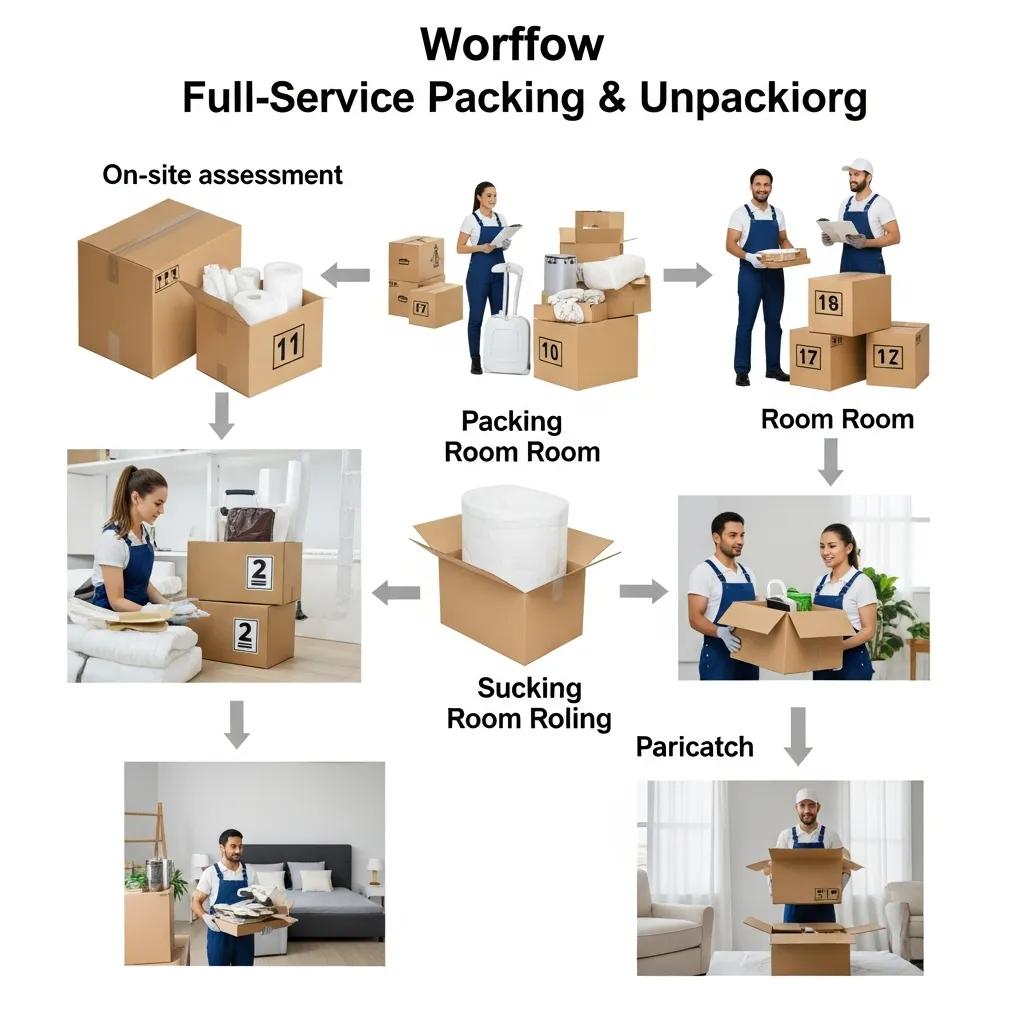
Full-service packing and unpacking begin with an on-site assessment where movers inventory rooms, estimate labor, and recommend materials based on fragile item counts and furniture complexity. Crews then stage materials, pack items room by room using standardized packing tape, labels, and cushioning, and prepare specialty crates for items like artwork or pianos to protect value during transit. After transport, teams prioritize unpacking essentials, assemble furniture, place boxes by room, and remove packaging debris to leave a functional living space. This end-to-end process reduces handling errors, and the coordinated workflow shortens overall move time while providing clear handoffs for insurance and claims if damage occurs.
What Items Are Typically Included in Packing Services?
Professional packers typically handle everyday household goods such as dishware, books, linens, clothing, electronics, and furniture, using appropriate padding and labeling for each category. They commonly exclude hazardous materials, perishable items, and certain regulated goods, which customers must remove in advance to comply with transport safety rules. Specialty item packing covers fragile and high-value pieces—glass tables, framed art, and musical instruments—often requiring custom crating or bolt-on protection. Knowing which items are included helps you plan which rooms to prioritize, and it clarifies the extra charges that may apply for specialty crating or disassembly of complex furniture.
For particularly delicate or valuable possessions, specialized packing methods are essential to guarantee their safe passage.
Custom Packing for Fragile Relocations
custom boxes and any modification (packing out with additional supports and/or padding) needed for individual boxes known to contain fragile items and security of the items being
Boxing Clever: Relocating the National Archives of Australia, 2017
How Much Do Professional Packing Services Cost?
Professional packing services use several pricing models—hourly labor rates, per-room flat fees, or itemized quotes that factor materials and crating—so estimates vary by provider and move complexity. Costs commonly reflect crew size, the number of packing hours, specialty material needs, and whether full-service packing or partial packing is selected; this combination determines whether a move is billed hourly or per-project. Typical price ranges for most residential moves can span modest partial-packing budgets to larger full-service estimates that include crating and unpacking; obtaining an in-home or virtual estimate provides the most accurate projection.
The table below highlights common cost influencers and typical ranges so you can scan factors quickly when requesting quotes.
| Cost Factor | How It Affects Price | Typical Impact |
|---|---|---|
| Labor hours / crew size | More hands and hours raise total labor costs | Medium–High |
| Packing materials & crating | Specialty crates and high-quality padding increase line items | Medium |
| Property access & travel | Long carry distances or difficult access add time-based fees | Low–Medium |
This cost overview clarifies that labor and materials drive most moving packing costs, so asking targeted questions about crew size and material quality yields better comparisons when you request estimates. For readers who want to compare providers quickly, this site operates as a lead-generation and information hub where you can request multiple estimates and match with trusted moving and storage partners to obtain accurate, comparable quotes.
What Factors Influence Packing Service Prices?
Several variables determine final packing costs: the estimated labor hours required, the materials and specialty crating necessary, the size of the property, and logistical complications such as stair carries or elevator reservations. Labor rates increase with crew size and move complexity; for example, fragile item packing or disassembly/reassembly of furniture requires more skill and time, raising costs. Materials—moving boxes, bubble wrap, packing tape, and custom crates—add to line-item charges and vary by quality and supplier. When requesting an estimate, provide inventory details and photos so providers can account for these factors and deliver comparable, transparent pricing.
Below is a short checklist to use when requesting quotes so vendors price the same scope and you can compare apples to apples.
- Provide an itemized room-by-room inventory and photos.
- Specify specialty items requiring crating or disassembly.
- Ask whether boxes and materials are included or charged separately.
Comparing responses using this checklist helps you spot hidden fees and select the best value provider for your budget and protection needs.
Are There Affordable Moving Box Solutions Included?

Whether moving boxes are included depends on the provider and the service level; full-service packing frequently bundles standard boxes and basic materials, while partial or hourly services sometimes bill materials separately. Affordable moving box solutions include purchasing used boxes, renting reusable plastic bins, or sourcing free boxes from retail partners; these options can reduce the material portion of your bill without sacrificing protection if paired with proper cushioning. Sustainable alternatives—like reusing sturdy boxes or choosing recyclable packing paper—also reduce costs and environmental impact. When you compare providers, ask specifically which moving box solutions are included, what grade of box they use, and whether cost-saving options are available.
A short summary: clarify inclusion of boxes upfront and weigh material quality against savings to avoid damage-related replacement costs later. For convenience, the site’s lead-generation tools can help you compare which providers include boxes and which require separate material fees so you can request tailored estimates.
Why Hire Professional Packers for Your Move?
Hiring professional packers reduces physical strain and cognitive load while increasing protection for fragile and valuable items through trained techniques and proper materials. Professionals use expert methods—layered cushioning, secure load distribution, and custom crating—that reduce breakage risk and help insurance teams attribute liability more clearly if damage occurs. Time savings are substantial: dedicated crews complete packing tasks faster than DIY efforts and manage logistics like labeling and staging so you can prioritize other moving tasks. Below is a concise list of the top benefits to help you decide whether to invest in professional packers.
Professional packers deliver measurable advantages that improve both the move experience and outcomes.
- Time Savings: Crews pack efficiently, reducing overall move-day hours.
- Damage Reduction: Expert cushioning and crating lower breakage risk.
- Insurance Support: Clear inventories and professional handling simplify claims.
These benefits demonstrate why many households choose professional packing to protect items and shorten the disruptive moving window. After considering benefits, many readers ask how packers specifically reduce day-to-day moving stress.
How Do Professional Packers Reduce Moving Stress?
Professional packers remove the major logistical burdens from your to-do list by coordinating material staging, inventorying boxes by room, and labeling items for prioritized unpacking. Crews follow systematic labeling systems and maintain simple inventories, which makes locating essentials on arrival straightforward and reduces time spent searching through boxes. By delegating heavy lifting and fragile-item protection to trained personnel, homeowners avoid injuries and the fatigue that complicates settling into a new place. This delegation creates immediate relief on moving day and smooths the transition toward unpacking and organizing the new home.
What Are the Advantages of Expert Packing Techniques?
Expert packing techniques—proper cushioning, custom crating, efficient box layouts, and strategic load balancing—protect valuables and streamline both transport and unpacking. For fragile items, crating isolates shocks and distributes weight to prevent concentrated pressure that causes breakage; for furniture, methodical disassembly and protective padding avoid surface damage. Efficient labeling and staging strategies allow crews to unload by room and prioritize essential boxes for the first 24 hours. These techniques reduce claims, speed move-in organization, and enable safer vehicle loading, which together make the higher upfront cost of expert packing feel like a prudent investment.
The fundamental goal of any packing strategy, especially for valuable items, is to ensure their complete protection from the rigors of transit.
Museum Packing Standards for Object Protection
The primary purpose of packing and encasement is to protect the packed objects against shock and damage, ensuring their preservation during transit.
Procedures and conservation standards for museum collections in transit and on exhibition, 1981
Knowing these advantages helps you weigh the trade-offs between DIY savings and professional protection, which in turn determines what services you request in provider quotes.
What Should You Expect from Unpacking Services for Moving?
Unpacking services typically include unpacking boxes by room, assembling furniture, placing items according to your plan, and removing packaging debris to leave the space ready for daily living. Providers may offer tiered unpacking: basic placement of boxes, room-by-room organization packages, or detailed setup services for kitchens and closets—each level increases time and cost but reduces the work you do after moving. Move-in unpacking accelerates the first 24–72 hours of post-move life by prioritizing essentials and staging bedrooms, kitchens, and bathrooms first so you can rest and function immediately. The following list outlines common unpacking scopes so you know what to expect and can match service levels to your needs.
- Basic Unpack & Placement: Boxes emptied and placed by room for homeowner arrangement.
- Essentials Prioritization: Immediate setup of kitchen, beds, and bathroom items.
- Full Organization: Drawer and cabinet setup, closet systems, and labeled storage.
These options let you decide whether you want a quick functional setup or a more complete organizational handoff from the mover. The next section explains how unpacking teams simplify the move-in process through prioritized workflows.
How Do Unpacking Services Simplify Your Move-In Process?
Unpacking teams simplify move-in by staging rooms for immediate use, prioritizing essentials boxes, assembling furniture, and removing packing materials for recycling or disposal. A common approach is a “first 24 hours” unpack plan that focuses on bedding, kitchen basics, toiletries, and a minimum set of cooking utensils so your household can function immediately. Technicians also ensure that furniture placement supports daily routines, which helps households resume normal schedules faster. This prioritization reduces the mental load of multiple unpacking decisions and makes settling in a deliberate, manageable process.
The way teams prioritize essentials transitions naturally into how unpacking services can support longer-term organization goals in your new home.
Can Unpacking Services Help Organize Your New Home?
Yes—unpacking add-ons often include closet system setup, kitchen organization, and in-home labeling or inventorying for storage, which can be purchased as part of a room-level package. These organization services turn unpacking into a productivity boost: properly arranged kitchen cabinets and bedroom closets reduce daily friction, and labeled storage improves long-term retrieval of seasonal items. Organizations can be customized to match your preferences, whether minimal staging or full drawer-level arrangement, and providers can document placements to aid future moves or insurance inventories. Investing in organization during unpacking speeds routines and increases satisfaction with your new living space.
Organization services are a logical extension of unpacking because they convert the transient disorder of moving into a durable, user-friendly setup.
How to Choose the Right Professional Packing and Unpacking Service?
Choosing the right provider requires comparing service inclusions, insurance coverage, scheduling flexibility, and references so you select a partner who matches your priorities for budget, fragile item protection, and timeline. Ask targeted questions about valuation coverage, whether materials and box-grade are included, crew qualifications for specialty packing, and cancellation or rescheduling policies. Use a simple comparison matrix to rate each provider across the same criteria—price, insurance, materials, references, and availability—and weigh reliability slightly higher than lowest price to reduce risk. The table below maps provider features to reader priorities and helps you rank candidates methodically when deciding who to hire.
| Provider Feature | Why It Matters | Reader Priority |
|---|---|---|
| Insurance/valuation | Protects against loss or damage | High |
| Materials supplied | Box grade and crating quality | Medium |
| Scheduling flexibility | Matches your timeline constraints | High |
This matrix shows insurance and scheduling are top priorities while materials influence damage risk; use it as a basis for scoring provider proposals and making a confident choice. The next subsections list the exact questions to ask and explain how to compare full-service providers in practice.
What Questions Should You Ask Before Hiring Packers?
Prepare a concise checklist of questions for every estimate conversation: confirm insurance and valuation coverage, ask whether estimates are in-home or virtual and how binding they are, verify crew qualifications for specialty packing, and clarify materials included, deposits, and cancellation policies. Inquire specifically about crating options for fragile items, how they handle appliances and electronics, and whether they provide an inventory list for claims. Ask for references or photos of prior jobs with similar scope to yours, and request clear timelines for packing and unpacking so you can coordinate move-day tasks. These questions ensure transparent comparisons and reduce the chance of last-minute surprises.
A consistent set of questions yields comparable answers, which makes provider selection a measurable process rather than an ad-hoc choice.
How to Compare Full-Service Packing and Unpacking Providers?
When comparing providers, create a simple scoring rubric that weights insurance, reliability (reviews/references), inclusions (materials/crating), and price; assign scores and prioritize companies with higher reliability even if price is slightly above average. Review sample job photos and ask about crew training for fragile-item packing, then verify claims handling procedures and required documentation for insurance. Balance cost against demonstrated competence—cheaper quotes that omit crating or valuation coverage can produce higher replacement costs after damage. Use the rubric to narrow to two finalists, then request a binding in-home estimate to finalize the choice.
A methodical comparison approach reduces risk and aligns your selected provider with both budget and protection priorities. In practice, comparison tools simplify this process: this lead-generation and information hub offers comparison features and partner listings that help you evaluate providers side-by-side and request estimates without contacting each company individually.
- Gather comparable written estimates from at least three providers.
- Score each provider using the rubric above to identify top candidates.
- Confirm scheduling, insurance details, and a clear scope of work before signing.
These steps shorten the decision cycle and reduce uncertainty during a busy moving timeline.
For personalized assistance, the site’s comparison tools and partner network simplify provider selection by letting you request multiple estimates and get matched with trusted movers and storage providers; this service streamlines the final decision while keeping control in your hands.
For additional convenience, you can request quotes through the lead-generation and information hub to receive matched estimates and shortlists from vetted providers, helping you book professional packing and unpacking services that align with your budget and move timeline.