
Table of Contents
ToggleEthical Damage Claims Process for Moving Companies

Ethical Damage Claims Process for Moving Companies: How to Protect Your Belongings and Assert Your Rights
A damage claim in the moving context is a formal request for compensation when household goods are lost, damaged, or destroyed during pickup, transit, or delivery, and an ethical claims process emphasizes transparency, timely communication, and fair valuation. This article teaches you how liability protections work, how to document and file a moving damage claim, what consumer rights apply, and which prevention steps reduce risk of loss. Moving company liability, valuation options, and federal rules such as FMCSA guidance shape how claims are calculated and resolved; knowing these mechanics improves outcomes and reduces dispute time. Readers will learn the differences between released value protection and full value protection, the documentation that strengthens claims, step-by-step filing procedures, dispute-resolution pathways including arbitration, and practical packing and inventory strategies that prevent damage. The guidance below blends regulatory context, actionable how-to steps, comparison tables, and examples so you can protect high-value items and assert your rights confidently when working with a professional mover.
What Liability Protections Do Moving Companies Offer for Damaged Goods?
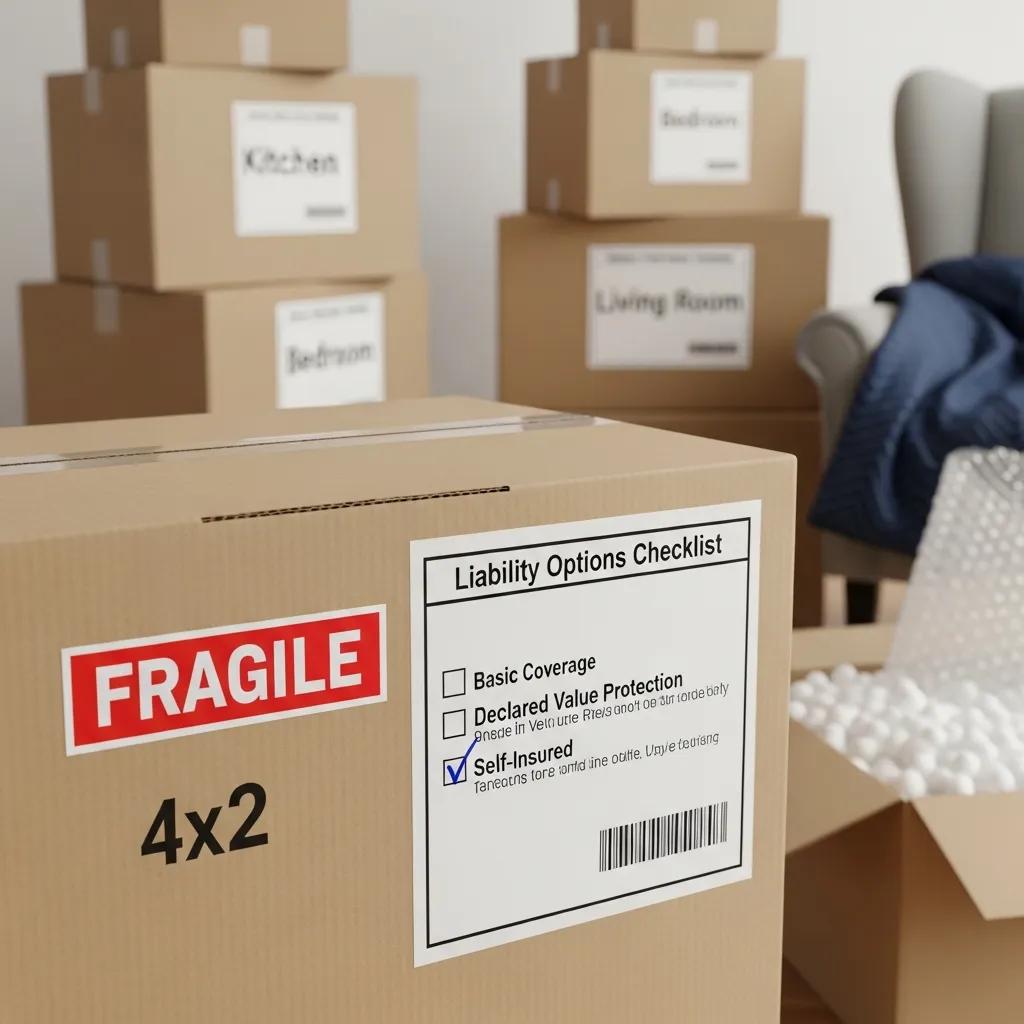
Liability protections for moving companies fall into distinct valuation and insurance categories that determine compensation methods, cost implications, and customer obligations. Released value protection (a federal baseline for interstate moves) limits carrier liability to a small dollar amount per pound per item, while full value protection imposes a higher carrier obligation to repair, replace, or pay the declared value; third-party insurance fills gaps when carrier options are inadequate. Understanding the mechanism behind each option helps consumers decide whether to accept basic coverages or pay for upgrades: released value minimizes carrier exposure but reduces compensation, whereas full value typically requires a value declaration and may raise the moving estimate. These distinctions affect how claims are calculated and which documentation is needed, and they lead naturally into numeric examples and a structured comparison to help choose the right protection for your move.
| Valuation Option | How Coverage Is Calculated | Typical Settlement Method |
|---|---|---|
| Released Value Protection | Carrier liability limited per pound per item (federal baseline for interstate moves) | Per-pound formula paying 60 cents per pound per damaged item |
| Full Value Protection | Carrier liable for repair, replacement, or cash settlement up to declared value | Repair or replacement first; cash if repair/replacement impractical |
| Third-Party Insurance | Policy limits and terms set by insurer, separate from carrier liability | Policy-dependent: direct claim to insurer for agreed settlement |
This comparison clarifies why customers with antiques or electronics often choose higher valuation or third-party policies, because per-pound calculations under released value rarely cover true replacement costs.
What Is Released Value Protection and Its Compensation Limits?
Released value protection is a limited-liability option commonly offered for interstate moves that caps carrier responsibility at a fixed rate of 60 cents per pound per damaged article according to federal guidance. For example, a standardized calculation multiplies the damaged item’s weight by the federally specified 60 cents-per-pound rate to produce the compensation amount, which often does not reflect market replacement cost for high-value items. Released value reduces moving cost because the carrier’s insured exposure is small, but it exposes customers to potential under-compensation when an item’s replacement value exceeds the per-pound award. Knowing this limitation helps customers decide whether to purchase supplemental coverage or declare a higher valuation to secure better protection for expensive goods.
How Does Full Value Protection Provide Comprehensive Coverage?
Full value protection requires the customer to declare an item’s value or accept the carrier’s valuation options; carriers then accept responsibility to repair, replace, or provide a cash settlement that reflects the item’s declared or replacement value. Mechanically, full value shifts the carrier’s exposure upward and often increases the move estimate, but it maximizes recovery options when damage occurs because the carrier must make the customer whole under the selected terms. Customers should declare high-value items explicitly and obtain written confirmation of declared values to ensure clear expectations during claims; this process leads into advice about documentation and the step-by-step claims workflow to secure timely assessment and settlement.
How Does Your Hometown Mover Ensure an Easy and Transparent Damage Claim Process?
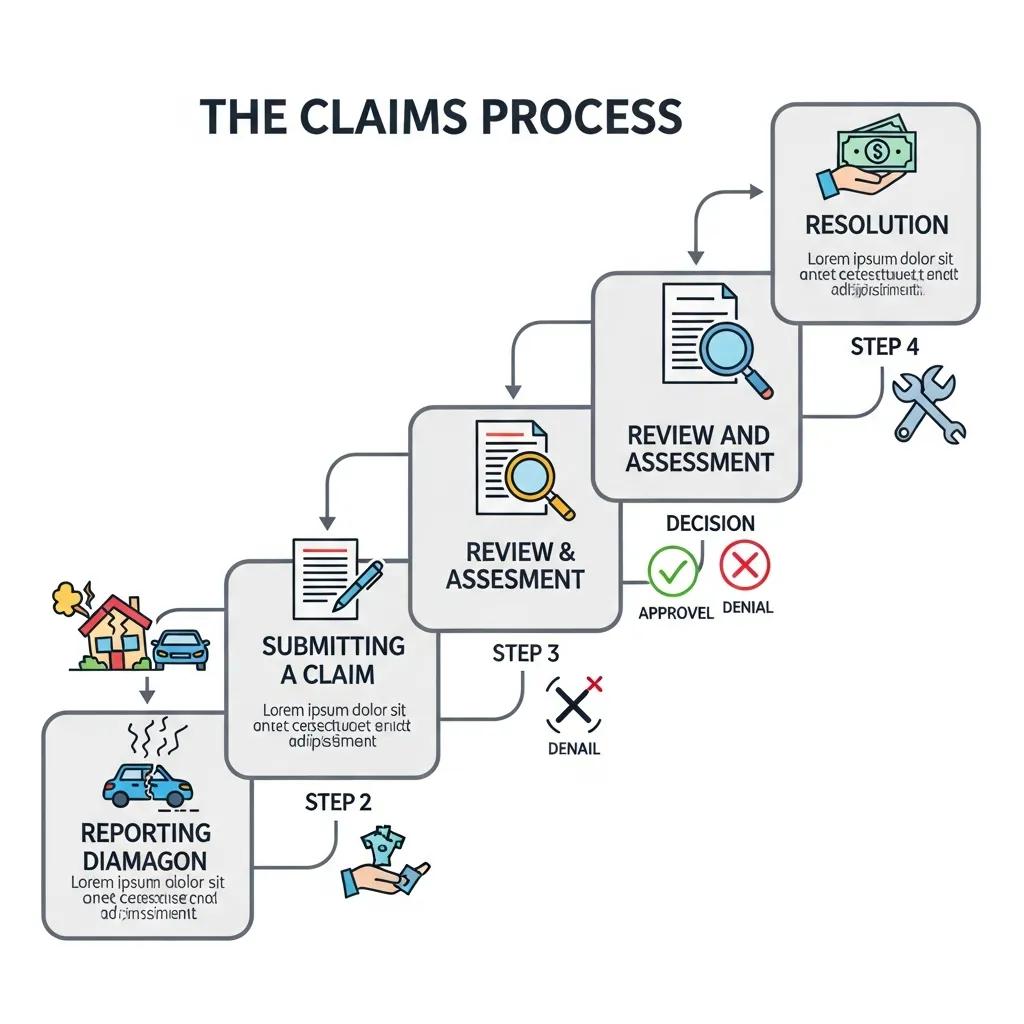
A transparent claims process centers on clear reporting steps, timely acknowledgement, documented investigation, and fair settlement offers; ethical providers publish procedures and expected timelines so customers understand how claims progress. Your Hometown Mover emphasizes an EASY CLAIMS PROCESS with accessible submission channels, documented acknowledgement, and a commitment to licensed and insured operations, which supports trust during claims. The company’s approach typically includes initial on-delivery notation, required documentation submission, inspection or adjuster review, and resolution offers within commonly accepted industry timeframes; these steps mirror best practices for fair handling and are supported by trust signals such as BBB ratings and customer reviews.
Below is a practical breakdown of the claims workflow with expected timeframes to set realistic expectations for customers.
| Step | Action Required | Expected Timeline / Requirement |
|---|---|---|
| Report Damage | Notify carrier at delivery and note damage on delivery paperwork | Immediate: note on Bill of Lading at delivery |
| Submit Claim | Complete claim form and provide photos, inventory, receipts | Within carrier/contract deadlines (see Bill of Lading) |
| Assessment | Adjuster review, inspection, or request for repair estimates | Acknowledgement within 30 days; inspection within 30–60 days |
| Resolution | Carrier offers repair/replace/cash settlement or denial | Typical resolution guidance within 90–120 days depending on complexity |
This timeline table helps customers track progress, set follow-up reminders, and escalate appropriately if acknowledgement or assessment milestones are missed.
What Are the Step-by-Step Procedures to File a Damage Claim?
Filing a moving damage claim begins with immediate recognition and documentation, followed by formal submission and timely follow-up; following each step increases the likelihood of a fair outcome. First, inspect goods at delivery and annotate any visible damage on the Bill of Lading or delivery document; photo evidence and written notes at time of delivery are critical. Second, assemble supporting documentation—photos, inventory, receipts, and repair estimates—and submit these materials through the mover’s designated claim channels. Third, follow up within the mover’s acknowledgement window and cooperate with any adjuster inspections, providing additional evidence if requested. These steps form a continuous process from discovery to resolution and naturally lead into the precise documentation checklist that strengthens claims.
- Inspect delivery and note visible damage on delivery paperwork immediately.
- Photograph damaged items with scale and timestamps, and keep packaging.
- Collect original receipts, the Bill of Lading, and the mover’s inventory list.
- Submit a completed claim form with photos and supporting documents promptly.
- Follow up on acknowledgements and provide repair estimates if requested.
Following this sequence ensures procedural compliance and prepares you for the adjuster’s review.
Which Documentation Is Required to Support Your Claim?
Strong claims rely on objective, time-stamped documentation that links items, condition, and value; carriers and arbitrators weigh evidence heavily when assessing liability. Essential documents include the signed Bill of Lading or delivery receipt with damage notations, an itemized inventory list showing pre-move condition, clear dated photos of damage with contextual scale, and original purchase receipts or appraisals for high-value items. Communication logs—emails or text exchanges with the mover—plus repair or replacement estimates strengthen the causation and cost arguments in a claim. Organizing files with descriptive names (e.g., “Kitchen_Hutch_Dent_2025-11-12.jpg”) and keeping a chronological claim folder reduces friction during review and supports any follow-up arbitration or complaint procedures.
What Are Your Consumer Rights When Filing a Moving Company Damage Claim?
Consumer rights around moving damage claims depend on whether the move is interstate or intrastate, with federal regulations providing baseline protections for interstate moves and state rules potentially extending or varying those protections. For interstate moves, the FMCSA requires carriers to provide customers with valuation choices and to process claims under established timelines; customers have the right to choose released value or full value protection and to receive documentation that explains carrier obligations. State-level rules can differ for local moves, so verifying the contract and state consumer protections is essential. Knowing these rights leads into practical dispute-resolution options and where to file complaints when needed.
Common consumer rights and remedies include:
- The right to choose valuation options disclosed by the carrier.
- The right to file a timely claim and expect acknowledgement and investigation.
- The right to appeal denials and pursue third-party arbitration or regulatory complaints.
These rights inform the decision to escalate denied claims through arbitration or regulatory channels, which the next subsection explains in detail.
How Do Federal and State Regulations Protect Moving Customers?
Federal rules, notably FMCSA requirements for interstate moves, mandate that carriers disclose valuation options and process claims under transparent guidelines; these federal baselines ensure minimum protections across state lines. FMCSA guidance establishes how valuation choices work and provides timelines for filing claims and expecting responses, while state laws may offer additional remedies for intrastate moves or impose different consumer notice requirements. Customers should reference their Bill of Lading and the mover’s written terms for company-specific deadlines and consult state consumer protection resources when moves are local. Understanding these layered protections helps customers choose appropriate evidence and remedies that align with governing rules.
What Dispute Resolution Options Are Available, Including Arbitration?
When informal settlement attempts fail, consumers can pursue neutral dispute-resolution paths such as arbitration, file complaints with federal or state agencies, or seek remedies through consumer organizations; each option has trade-offs in cost, time, and finality. Arbitration often offers a faster, less formal alternative to litigation, with many moving companies participating in third-party arbitration programs that can be binding; the process typically involves submitting evidence, hearing procedures, and a panel decision within a defined timeframe. Alternatives to arbitration include filing an FMCSA complaint for interstate moves or contacting the Better Business Bureau for mediation; choosing the right path depends on desired outcomes, potential legal costs, and whether binding decisions are acceptable. Knowing these options guides escalation strategy after a denial or unsatisfactory settlement.
How Can You Prevent Damage During Your Move with Professional Packing and Handling?
Preventing damage begins with selecting appropriate packing approaches, using quality materials, and documenting item condition before transfer; professional packing and specialty handling reduce the likelihood of claims and simplify resolution when issues arise. Effective prevention combines knowledgeable packers, custom crating for fragile or high-value goods, and protective in-transit measures such as blanket wrap, floor runners, and shrink-wrap to secure furniture and prevent abrasion. Pre-move inventory and condition records also deter disputes by creating a clear baseline.
Reducing Loss & Damage Claims in Household Goods Moving
This thesis investigates the current code 4 shipping method used when moving household goods from the continental United States to overseas locations. Research questions examined in this thesis are 1 can the loose stow seavan method reduce loss and damage claims 2is there a better way to secure code 4 household goods shipments when moved overseas 3 are there value added benefits to DOD for implementing new methods in overseas shipping. This thesis supports the premise that Military Traffic Management Command MTMC can reduce loss and damage claims occurring in overseas shipments by including the loose stow seavan method as an option to the personal property shipping office PPSO. Value added benefits realized by DOD exercising this option includes, shipping cost savings, reduction of loss and damage claims costs, good will through customer satisfaction, and leverage on the carrieragent when quality is not maintained.
The Household Goods Shipment and Storage Program: The Problem of Loss and Damage Occurring in Code 4 Shipments., 1995
The following service comparison table explains how common packing and handling options protect specific item types and the outcomes customers can expect.
| Service | What It Protects | Examples / Outcomes |
|---|---|---|
| Standard Packing | Everyday household items | Boxes, bubble wrap, labeled cartons for general protection |
| Specialty Packing & Crating | Antiques, artwork, electronics | Custom crates, foam inserts, climate protection for sensitive goods |
| Transit Protection (wrap/runners) | Furniture, floors, fixtures | Blanket wrap, shrink-wrap, and floor runners prevent scratches and shifting |
This table shows why investing in specialty packing or transit protection often reduces replacement costs and claim disputes for delicate or valuable possessions.
What Packing Services and Supplies Help Protect Fragile and High-Value Items?
Professional packing services use materials and techniques tailored to item fragility and value, combining double-wall boxes, bubble wrap, corner protectors, and custom crating as needed to minimize shock and compression damage. For electronics and artwork, packers often use anti-static materials, foam inserts, or custom-built crates to stabilize items during transit; for furniture, blanket wrap and shrink-wrap prevent abrasion and loose-part damage. Customers should declare high-value items and consider full value protection or third-party insurance when the cost to replace exceeds released-value formulas. Understanding these service choices helps you decide on packing levels that match risk and value.
- Standard packing protects common household goods in boxes.
- Specialty crating stabilizes antiques and artwork for long distances.
- Transit protection like blanket wrap and floor runners shields furniture and flooring.
Selecting the right combination of these services directly reduces both the chance of damage and the complexity of later claims.
How Does Pre-Move Inventory and Documentation Support Damage Prevention?
A room-by-room inventory with condition notes and photos creates a reference that prevents disputes and accelerates claims when damage occurs, because it links pre-move condition to post-move findings. Creating labeled lists, attaching photos to each inventory line, and flagging high-value items for special handling instruct movers and supply objective evidence if a claim is needed. Additionally, providing the mover with a copy of the inventory and collecting a signed Bill of Lading that references special-handling notes ensures both parties share expectations. This proactive documentation not only reduces the probability of damage but also strengthens any subsequent claim by demonstrating due diligence.
What Are Common Questions About Moving Damage Claims and Liability?
Customers frequently ask about deadlines, denial outcomes, and how settlements are calculated; addressing these frequent concerns clarifies action steps and reduces stress during dispute resolution. Timelines for filing depend on whether the move is interstate or local and on the mover’s contract terms, while denials commonly hinge on documentation gaps or pre-existing conditions. Understanding typical settlement mechanics—repair-first approaches, depreciation rules, and per-pound formulas—helps set realistic expectations. The concise Q&A items below answer the most common procedural questions and guide immediate next steps.
- How long do you have to file a claim? See the next subsection for details on deadlines.
- What happens if a claim is denied? Refer to the denial subsection for stepwise escalation options.
- How are settlements calculated? Settlements vary by valuation option—released value uses per-pound formulas, full value prioritizes repair or replacement, and third-party policies follow insurer terms.
These short answers prepare you for deeper procedural guidance that follows.
How Long Do You Have to File a Damage Claim?
For interstate moves, federal guidance typically allows up to nine months to file a formal written claim from the date of delivery, but customers should act immediately because earlier notice and documentation improve outcomes and can be required by contract. Internally, moving companies often acknowledge claims within about 30 days and aim to resolve routine claims within 90–120 days, though complex losses may take longer. For intrastate moves, state law or the mover’s contract may prescribe different deadlines; always check the Bill of Lading for company-specific timelines and document promptly to preserve rights. Prompt reporting and evidence collection shorten investigation times and increase the likelihood of recovery.
What Happens If a Moving Company Denies Your Claim?
When a carrier denies a claim, common reasons include evidence of pre-existing damage, insufficient documentation, or coverage exclusions; the immediate response should be to request a written denial explaining the basis and to gather additional evidence to rebut the denial. Next steps include asking for internal review, pursuing third-party arbitration if available, filing complaints with regulatory bodies for interstate moves, or seeking mediation through consumer organizations such as the Better Business Bureau. If arbitration or regulatory complaints are unsuccessful, legal counsel can evaluate whether court action is warranted; escalating strategically depends on the strength of documentation and the amount in dispute.
For those who need help resolving a denial, consider escalating in the following order:
- Request internal re-evaluation with new evidence.
- File for third-party arbitration or mediation if available.
- Submit complaints to federal or state regulators or consumer agencies.
- Consult legal counsel for advice on litigation if amounts justify court action.
This escalation ladder helps preserve options while pushing for fair reconsideration.
For tailored help with claims or to request a moving estimate that includes packing and protection options, Your Hometown Mover provides an EASY CLAIMS PROCESS, free basic liability coverage by default with upgrade options to more comprehensive protection, and proactive prevention services like professional packing, blanket wrap, floor runners, and free shrink-wrap protection. The company is licensed and insured and highlights trust signals such as a high number of five-star reviews and an A+ BBB rating, which supports transparent handling of claims and customer inquiries.
- Get a clear estimate that lists declared values and available protections.
- Request packing and crating for valuables to minimize claim risk.
- Keep documentation in a single folder and submit promptly if damage occurs.
These practical steps combined with company-level transparency help reduce disputes and speed resolution when problems arise.
Frequently Asked Questions
What should I do immediately after discovering damage to my belongings during a move?
Immediately after discovering damage, you should document the condition of the items and report the damage to your moving company. Note any visible damage on the Bill of Lading or delivery receipt at the time of delivery. Take clear photographs of the damaged items, including close-ups and wider shots that show context. This documentation is crucial for supporting your claim later. Prompt reporting and thorough documentation can significantly improve your chances of a successful claim.
How can I ensure my high-value items are adequately protected during a move?
To ensure high-value items are adequately protected, consider using specialty packing services that utilize custom crating, anti-static materials, and foam inserts. Clearly declare these items to your moving company and opt for full value protection or third-party insurance to cover their replacement costs. Additionally, create a detailed inventory with photographs of these items before the move, which can serve as evidence in case of damage. This proactive approach minimizes risk and enhances your claim’s strength if needed.
What are the typical timelines for the claims process after filing a damage claim?
After filing a damage claim, the typical timeline involves several key steps. Moving companies usually acknowledge claims within 30 days and aim to complete inspections within 30 to 60 days. The resolution process can take anywhere from 90 to 120 days, depending on the complexity of the claim. It’s essential to keep track of these timelines and follow up with the moving company if you do not receive updates, ensuring that your claim is processed efficiently.
Can I appeal a denied claim, and what steps should I take?
Yes, you can appeal a denied claim. Start by requesting a written explanation from the moving company detailing the reasons for the denial. Gather any additional evidence that may support your case, such as photographs or documentation that were not included in your initial claim. You can then ask for an internal review of the decision. If the appeal is unsuccessful, consider pursuing third-party arbitration or filing a complaint with regulatory agencies, depending on whether your move was interstate or intrastate.
What types of insurance options are available for moving damage claims?
There are several insurance options available for moving damage claims. Released value protection is the most basic, offering minimal coverage at a low cost, while full value protection provides more comprehensive coverage, requiring you to declare the value of your items. Additionally, third-party insurance can be purchased to cover gaps in the moving company’s liability. Each option has different implications for compensation, so it’s important to evaluate your needs and choose the coverage that best protects your belongings during the move.
How can I prevent damage to my belongings during the moving process?
Preventing damage during the moving process involves careful planning and execution. Use high-quality packing materials, such as double-wall boxes, bubble wrap, and custom crating for fragile items. Consider hiring professional packers who are trained in handling delicate and high-value goods. Additionally, create a detailed inventory of your items and document their condition before the move. Implementing these strategies can significantly reduce the risk of damage and simplify the claims process if issues arise.
Conclusion
Understanding the ethical damage claims process empowers consumers to protect their belongings and assert their rights effectively during a move. By familiarizing yourself with liability protections, documentation requirements, and your consumer rights, you can navigate claims with confidence and minimize potential disputes. Take proactive steps to ensure your high-value items are adequately protected and consider professional packing services for added security. For tailored assistance or to explore our moving services, reach out to Your Hometown Mover today.