
Table of Contents
ToggleSecure & Flexible Storage Solutions for Your Moving Needs
Secure & Flexible Storage Solutions for Your Moving Needs: Comprehensive Moving and Storage Services
Secure and flexible storage solutions for moving combine short-term convenience with long-term protection, helping households and businesses bridge gaps during relocation while preserving valuable items. This article explains the major storage types—temporary storage, long-term storage, portable storage, self-storage, record storage, and climate-controlled units—how each works, and when to choose one for moving-related needs. Readers will learn how secure storage units protect belongings through layered security and insurance, why portable containers add scheduling flexibility, and which sensitive items require climate control to prevent damage. Practical guidance also covers sizing decisions, access and lease terms, pricing models, and the booking process so you can plan moves with fewer surprises. Throughout the guide we reference integrated moving-plus-storage workflows and industry trust signals to help you select reliable providers, and the final section outlines payment and booking options including Move Now, Pay Later with 0% APR to simplify budgeting for a move. Next we define the key storage types and compare their best-use scenarios.
What Are the Key Types of Storage Solutions Offered for Moving?
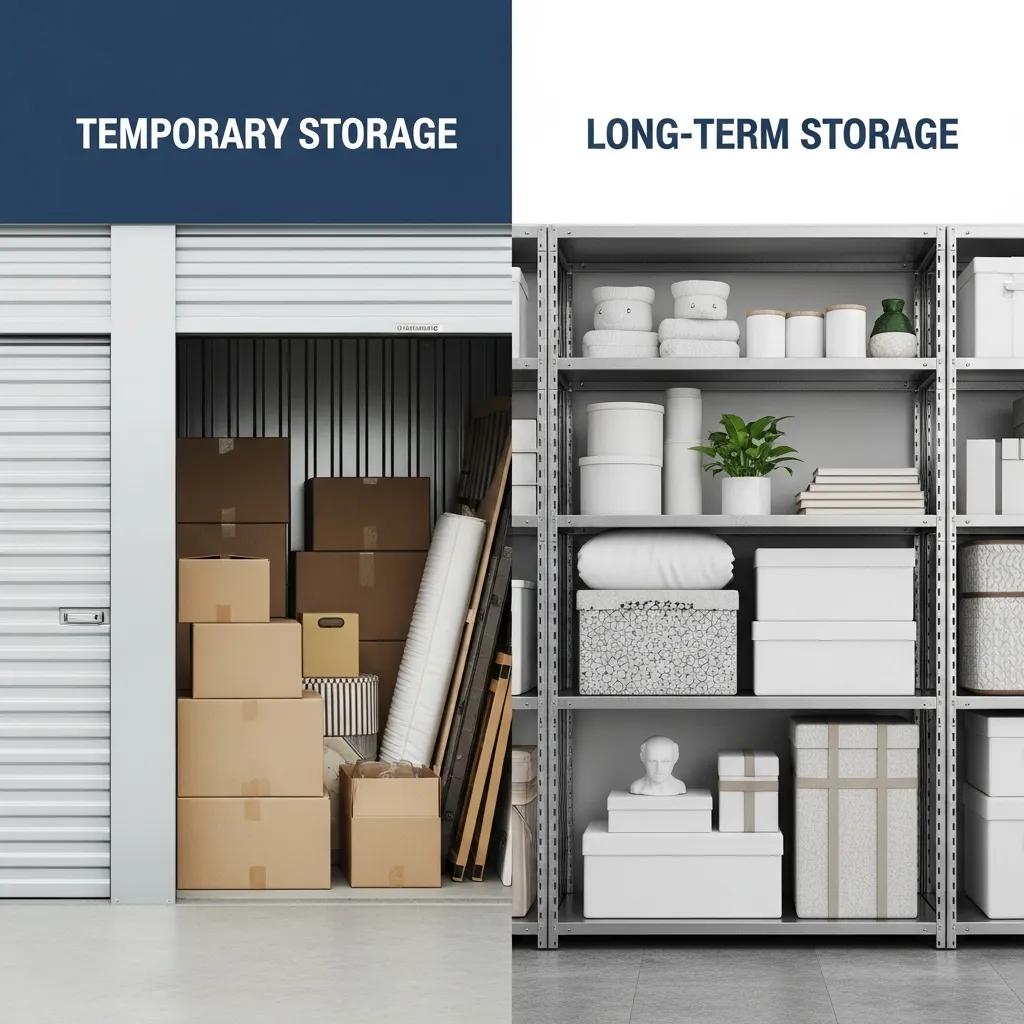
Storage solutions used in moving fall into several distinct types, each engineered for different durations, access levels, and protection needs. Understanding these types helps you match the storage approach to moving timelines, property access, and item sensitivity so you avoid overpaying or risking damage. Below is a concise comparison that highlights typical duration, access, and best use-cases for each storage category to make quick decisions easier. This foundation leads directly into practical scenarios where temporary versus long-term storage is preferable.
Different storage types and when to use them:
- Temporary storage is ideal for short gaps between move-out and move-in dates, renovations, or staging during sale processes.
- Long-term storage suits overseas moves, extended travel, or seasonal overflow that require predictable pricing and inventory oversight.
- Portable storage containers enable on-site loading and staged moves when driveway access or flexible pacing is needed.
| Storage Type | Typical Duration | Best Use-Case |
|---|---|---|
| Temporary Storage | Days to a few months | Move staging, short-term delays, renovations |
| Long-Term Storage | Several months to years | Overseas moves, seasonal storage, extended transitions |
| Portable Storage Containers | Days to months (with transport option) | On-site loading, remodels, phased moves |
| Self-Storage (traditional) | Flexible monthly | Cost-effective storage with regular access |
| Record Storage | Long-term archival | Legal, tax, or compliance document retention |
| Climate-Controlled Storage | Short to long-term | Electronics, antiques, artwork, sensitive documents |
How Does Temporary Storage Support Smooth Relocation?
Temporary storage provides a short-duration buffer that eases scheduling conflicts, staging, and last-minute delays by offering secure space for essentials while you finish a move. It works by allowing movers or occupants to place items into storage for specific windows of time, avoiding rushed packing and last-minute double-handling that raise damage risk. Typical use-cases include closing date mismatches, home renovations, and temporary housing transitions where immediate full unpacking is impractical. Preparing items for temporary storage—labeling boxes, disassembling furniture, and keeping an inventory—improves retrieval speed and reduces handling errors, which leads naturally into considering long-term storage needs when timelines extend.
What Are the Benefits of Long-Term Moving Storage?
Long-term moving storage delivers predictable monthly pricing, enhanced inventory options, and economies of scale when items need protection for months or years, such as during long deployments, extended overseas assignments, or seasonal equipment storage. Facilities that support long-term storage often offer discounts for extended leases and inventory management tools that simplify item tracking and retrieval after long durations. Security and preservation measures—periodic inspections, pest control, climate control for sensitive goods—help maintain item condition over time, and customers should check insurance coverage and facility protocols before committing. Understanding long-term benefits sets the stage for evaluating how secure storage units safeguard belongings during any move.
How Do Secure Storage Units Protect Your Belongings During a Move?
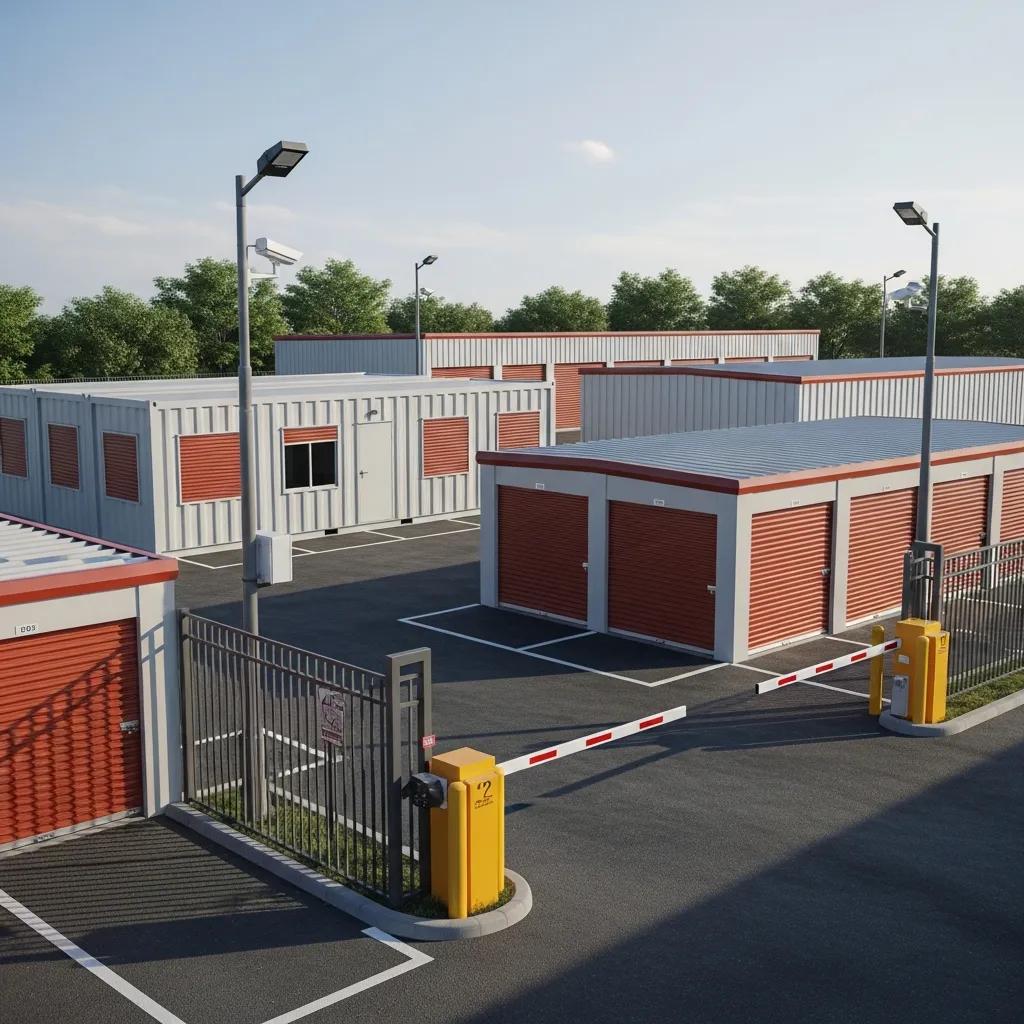
Secure storage units protect stored items by combining physical controls, monitoring systems, and insurance options to reduce theft, loss, and environmental damage during relocation periods. These units typically employ multiple layers of security—perimeter fencing, gated access, electronic keypads, on-site staff, and 24/7 surveillance—to deter unauthorized entry and document incidents. Customers should verify facility practices such as staff training, access logs, and claims procedures to ensure alignment with their risk tolerance and the value of stored goods. Below we examine advanced features in more detail and then discuss how insurance complements these physical protections to create a comprehensive security posture.
Top security measures and how they protect stored items:
- 24/7 video surveillance records activity and deters theft while helping with incident investigations.
- Gated access with coded entry reduces casual trespass and ensures only authorized users can reach units.
- Unit-level protections like high-security locks and alarms provide a final barrier against forced entry.
| Security Feature | Attribute | Protection Value |
|---|---|---|
| 24/7 Surveillance | Continuous video recording | Deters theft, aids incident review |
| Gated/Keypad Access | Controlled perimeter entry | Limits unauthorized access |
| Unit Alarms & High-Security Locks | Alarmed unit doors, hardened locks | Alerts staff to breaches, resists forced entry |
| On-site Staff & Protocols | Trained personnel, clear procedures | Rapid response and access control |
| Insurance Options | Facility or third-party coverage | Financial protection for loss/damage |
What Advanced Security Features Ensure Storage Safety?
Advanced storage security features rely on technology and disciplined procedures to prevent and quickly detect incidents, combining hardware like HD cameras and motion sensors with software for real-time monitoring and alerts. Continuous monitoring systems capture high-resolution footage and integrate with motion detection to flag unusual activity, while access control logs record entries and exits for auditing. Unit-level alarms and reinforced locks add an immediate layer of defense that triggers staff response and helps protect high-value items until a claim process begins if needed. Verifying these features with facility staff—asking about monitoring frequency, footage retention, and on-site response—ensures you select a site whose practices match your security needs and prepares you to evaluate insurance options next.
How Does Insurance Enhance Protection for Stored Items?
Insurance complements physical security by covering financial loss from theft, fire, water damage, or other perils not prevented by facility measures, and it is essential for high-value items or long-term storage commitments. Coverage can come from the facility’s policy or third-party moving/storage insurance; customers should ask about policy limits, deductibles, covered perils, and claims procedures to avoid unexpected gaps. For valuable collections, electronics, or business records, supplemental third-party insurance often provides broader coverage and higher limits than facility-provided policies, and documenting inventory with photos and serial numbers expedites claims. Understanding insurance interplay with physical protections leads naturally into considering portable storage options for flexible, on-site solutions.
What Are the Advantages of Portable Moving Storage Containers?
Portable moving storage containers offer flexible on-site placement, allowing you to load at your own pace and reduce double-handling by keeping items at your property until transport is required. This model supports phased moves, renovations, and staging by delivering a container to your driveway or a nearby safe location where you can organize belongings without time pressure. Transport logistics are simplified when containers can be picked up and moved by the same provider, reducing coordination between separate movers and storage facilities. Below we explain on-site advantages and then outline typical container sizes and delivery options so you can choose the right configuration for your move.
Portable containers provide these practical benefits:
- Load at your pace to reduce rushed packing and lower the chance of damage.
- Minimize double-handling by keeping items in one container from home to storage.
- Offer pickup and delivery services to transport contents directly to a new location.
| Container Size | Typical Capacity | Best Use-Case |
|---|---|---|
| Small (5×5–5×8) | 1–2 rooms, boxes | Downsizing, temporary overflow |
| Medium (10×8–10×10) | 2–3 rooms, small furniture | Apartment moves, staged packing |
| Large (10×20) | 3–5 rooms, large furniture | Whole-home moves, significant inventory |
How Does On-Site Portable Storage Offer Flexibility?
On-site portable storage changes the pacing of a move by letting you load and access belongings on your schedule instead of being bound to a strict truck arrival window, which reduces stress and coordination friction. This approach is especially useful during renovations, estate transitions, or when coordinating remodeling and staging where movers can load items over several days. On-site placement also reduces the risk of double-handling items that occurs when moving from home to separate off-site storage and then to the new residence. Considering access, driveway constraints, and local regulations for temporary container placement should precede booking to ensure a smooth setup and transport later.
To further simplify your move, professional packing services can save significant time and ensure your belongings are securely prepared for transport and storage.
What Sizes and Delivery Options Are Available for Portable Containers?
Portable container services typically offer small, medium, and large units with delivery, pickup, and optional transport to a storage site, enabling tailored logistics for the move. Small units suit a few rooms or seasonal storage, medium units handle most apartment moves, and large containers accommodate full-house moves; choosing the right size depends on inventory and home access. Delivery and pickup timelines vary, and providers that own their own trucks can coordinate placement and transport more predictably, which simplifies scheduling and accountability during transit. Understanding these delivery and sizing options helps you select a container that fits both volume and logistical constraints before discussing climate needs for sensitive items.
Why Choose Climate-Controlled Storage for Sensitive Items?
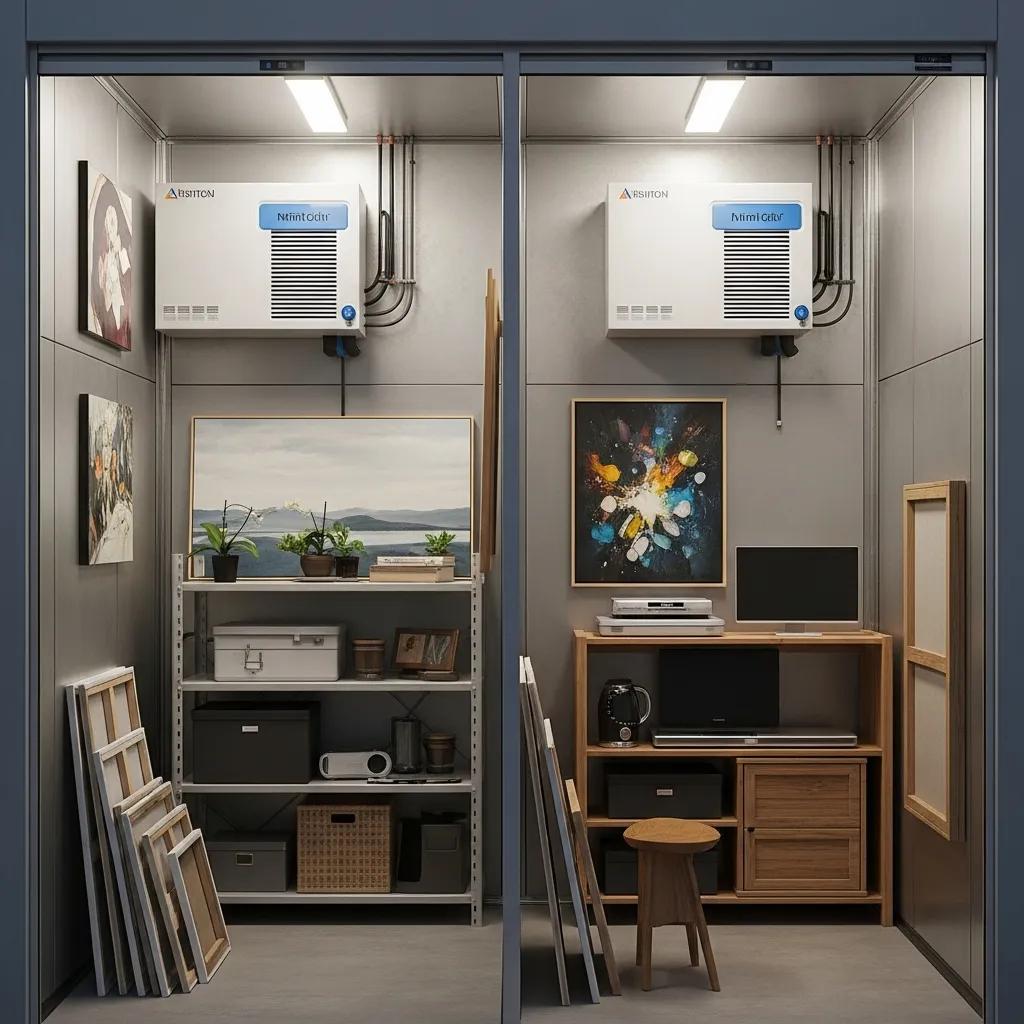
Climate-controlled storage regulates temperature and humidity to protect sensitive materials from warping, corrosion, mold, and degradation, making it essential for electronics, antiques, artwork, and certain documents during moves. These units use HVAC systems, dehumidifiers, and continuous monitoring to maintain stable environmental conditions that preserve item integrity across short or extended storage intervals. Choosing climate control reduces the risk of costly restoration for wooden furniture, musical instruments, or archival materials affected by seasonal swings. After defining which items benefit most, we explain how climate control systems maintain optimal conditions and what to verify with a provider.
Climate control matters because:
- Stabilized temperature prevents expansion and contraction that damages delicate materials.
- Humidity control limits mold growth and protects paper, fabrics, and wood finishes.
- Continuous monitoring and alarms notify managers of system faults before damage occurs.
| Climate Control Component | Function | Benefit |
|---|---|---|
| HVAC with thermostat | Regulates temperature range | Prevents thermal stress on materials |
| Dehumidification | Reduces ambient moisture | Limits mold, mildew, and corrosion |
| Monitoring & Alarms | Tracks conditions and alerts staff | Early detection of system failures |
Which Items Benefit Most from Climate-Controlled Storage?
Certain categories of belongings are especially vulnerable to temperature and humidity changes and therefore benefit most from climate-controlled storage, including wooden furniture, fine art, musical instruments, sensitive electronics, and important paper records. Wood can warp or crack as humidity fluctuates, oil paintings and frames may separate or develop mold, and electronics suffer from condensation-related corrosion that degrades functionality over time. For legal or tax documents, stable humidity prevents ink bleed and paper brittleness, preserving readability and compliance records. Proper packing—sealed containers, moisture-absorbing desiccants, and protective wraps—further enhances climate protection for these items.
How Does Climate Control Maintain Optimal Storage Conditions?
Climate-controlled facilities use integrated HVAC systems and dehumidifiers calibrated to target temperature and humidity ranges appropriate for stored goods, and they often include sensors that log conditions and trigger maintenance alerts. Typical target ranges are conservative—moderate temperatures with relative humidity controlled to prevent condensation—though customers should ask facilities for exact specs and monitoring reports. Regular maintenance, filter changes, and calibrated sensors ensure systems perform reliably, and documented monitoring practices give customers confidence that conditions remain stable over time. Verifying these operational details helps you choose a climate-controlled unit that matches the sensitivity of your possessions and leads into selecting overall storage solutions.
How Can You Select the Right Storage Solution for Your Moving Needs?
Selecting the right storage solution requires assessing inventory size, item sensitivity, access needs, lease flexibility, and whether you prefer on-site or off-site storage during a move. A methodical inventory, mapping items to storage types (climate-controlled, portable, long-term), and applying sizing rules of thumb prevents overpaying and reduces the risk of under-sizing. Lease terms—month-to-month versus longer contracts—affect flexibility during uncertain move timelines, and bundled moving+storage services can simplify scheduling and responsibility. Next we provide practical sizing rules and then discuss how lease terms and access policies impact convenience.
Key decision factors to evaluate:
- Inventory volume and item types to determine unit size and required protections.
- Access frequency and timing to choose between 24/7 access or business-hour facilities.
- Lease flexibility and bundling to reduce coordination between movers and storage providers.
What Factors Determine the Ideal Storage Unit Size?
Choosing the right unit size starts with a room-by-room inventory and prioritizing large items like beds, sofas, and appliances, then estimating box counts for remaining goods to map to unit dimensions. Practical rules-of-thumb include: a 5×5–5×8 unit holds items from a studio or small bedroom, a 10×10 unit typically fits contents of 1–2 bedrooms, and a 10×20 unit can accommodate a 3–4 bedroom household, though layouts and furniture types affect fit. To avoid overpaying, factor stacking possibilities, disassemble large furniture, and leave aisle space for retrieval; to avoid under-sizing, add 10–20% buffer for bulky items and unexpected boxes. Inventorying and visualizing item placement reduces size selection errors and transitions into lease and access considerations.
How Do Flexible Lease Terms and Access Options Enhance Storage Convenience?
Flexible lease terms—such as month-to-month agreements—provide essential agility when move dates shift or timelines remain uncertain, avoiding long-term commitments that lock customers into unused capacity. Extended-term discounts make sense when storage needs are predictable and long, but they reduce flexibility for sudden changes; understanding penalty clauses and notice periods is therefore critical. Access policies—24/7 access versus limited business hours—impact planning for staged moves or urgent retrievals, so confirm access windows and required identification procedures when booking. Bundling moving and storage services under one provider simplifies terms and responsibility, which naturally leads to discussing pricing and booking processes that formalize the arrangement.
Beyond storage, many customers also require comprehensive moving services. For those planning a move within the same city or region, local moving services offer tailored support to ensure a smooth transition.
What Are the Pricing Models and Booking Processes for Moving Storage?
Pricing models for moving storage commonly include monthly rental rates for fixed units, long-term discounts for extended commitments, and delivery or pickup fees for portable containers; transparent breakdowns help you budget accurately. Booking typically follows a sequence: request a quote, select unit size and options (climate control, insurance), schedule delivery/pickup, and complete payment and documentation before move-in. Payment and financing options can ease upfront costs, including promotional offers; these transactional details are crucial when comparing providers and aligning services with move schedules. Below we explain the Move Now, Pay Later option and then provide a step-by-step booking checklist to streamline the process.
Common pricing components to compare:
- Monthly rental fee for the unit type and size.
- Delivery/pickup or transportation fees for portable containers.
- Discounts or promotional guarantees that reduce overall cost.
| Pricing Component | Typical Structure | Consideration |
|---|---|---|
| Monthly Rental | Flat monthly rate by unit size | Compare per-cubic-foot cost |
| Long-Term Discounts | Reduced rate for multi-month commitments | Check minimum term and notice |
| Portable Delivery Fees | One-time transport charge | Factor in repeated moves |
| Insurance Costs | Facility or third-party premiums | Verify limits and exclusions |
How Does the Move Now, Pay Later with 0% APR Offer Work?
Move Now, Pay Later with 0% APR allows customers to schedule moving and storage services immediately while spreading payment over time without interest, making it easier to manage upfront relocation costs. Eligibility, covered services, and application steps vary by provider, so ask about what parts of your move and storage booking the plan covers and any minimums or required approvals. For customers combining moving, packing, and storage services, this financing option can align cash flow with the moving timeline and reduce the need for large immediate outlays. After understanding financing, follow the practical booking steps to finalize arrangements and access your chosen storage.
What Steps Are Involved in Booking and Accessing Storage Solutions?
Booking and accessing storage typically follows a straightforward sequence that moves from assessment to occupancy, ensuring documentation and scheduling align with your move timeline and protection needs. The common steps are: obtain a detailed quote based on inventory and unit type, select unit size and optional services (climate control, insurance, portable delivery), schedule delivery/pickup or move-in date, complete required paperwork and payment or financing setup, and confirm access procedures and contact points for pickup or retrieval. Preparing an inventory list, labeling boxes, and noting serial numbers for high-value items speeds move-in and simplifies any future claims, which completes the operational workflow for moving storage.
- Request a quote with inventory details and desired add-ons.
- Choose unit type, size, and optional protections (climate control, insurance).
- Schedule delivery/pickup or move-in, complete paperwork, and arrange payment.
As part of a comprehensive move, many individuals find themselves needing to declutter. Services like junk removal can help clear out unwanted items efficiently before or after your relocation.
For customers seeking integrated moving and storage services, Your Hometown Mover operates nationwide with strong presence in New York and Florida and offers a full range of moving services including local, long-distance, expedited long-distance, commercial moves, junk removal, and packing services alongside storage options such as Record Storage, Self-Storage, and Portable Storage. The company emphasizes trust signals—Move Now, Pay Later with 0% APR, Best Price Guarantee / MoveMatch Guarantee, 400+ 5-Star Reviews and A+ Rating on BBB, Licensed & Insured operations, Full-Service Solutions including packing and junk removal, and owned trucks for full control and accountability—to simplify booking and provide consistent service during moves. Requesting a personalized quote or scheduling a combined moving-and-storage plan through the provider lets you lock logistics and financing in a single coordinated workflow that reduces coordination overhead. This operational integration helps complete the booking flow and supports smoother move execution.