
Table of Contents
ToggleUnderstanding Moving Insurance: Protecting Your Belongings During a Move

Understanding Moving Insurance: Protecting Your Belongings During a Move
Moving insurance is the valuation coverage or protection that helps you recover value if household goods are lost, damaged, or destroyed during transit, and understanding it reduces financial risk and stress. This guide explains what moving insurance is, the different valuation coverage options movers must offer, how liability is calculated, and practical steps to protect valuables and file a claim effectively. Many people assume their mover’s basic coverage fully protects high-value items, but valuation types and exclusions determine whether you receive per-pound payouts, repair or replacement, or declared-value compensation. This article breaks down Released Value, Full Value, declared and third-party insurance, the regulatory framework that governs mover liability, and clear checklists for packing, documentation, and claims. You will learn how costs are calculated, which factors raise premiums, and pragmatic ways to lower risk through professional packing, crating, and accurate inventories. The goal is to give a practical roadmap so you can choose the right coverage, document possessions properly, and take confident next steps when booking a move or if something goes wrong.
What Is Moving Insurance and Why Is It Essential?
Moving insurance is the valuation coverage that determines how a mover or insurer pays for loss or damage to your belongings during a move, and it matters because it translates risk into predictable financial remedies. The mechanism works either by limiting liability to a per-pound amount, by promising repair or replacement up to declared value, or by relying on a third-party policy that pays replacement cost or agreed value. The primary benefits are financial protection against unexpected losses, legal clarity on carrier responsibility, and peace of mind while transferring household goods across distances. Understanding these mechanisms helps you decide when a basic mover valuation is sufficient and when upgrading or buying third-party insurance will better match the value of your possessions. Below is a concise summary of what valuation coverage commonly covers, useful for quick reference.
Moving insurance commonly covers the following types of loss or damage:
- Physical damage to household items sustained during handling, loading, transit, or unloading.
- Complete loss of goods that are lost in transit, misdelivered, or destroyed.
- Partial loss where repair costs or partial replacement is required to restore household function.
These coverage points clarify what to expect from valuation options and set up the next discussion: how payout mechanics differ and why that affects your choice between per-pound and full-value options. In practical terms, some movers include free basic liability and offer upgrades to comprehensive coverage, so check options and limits when you book.
How Does Moving Insurance Protect Your Belongings?
Moving insurance protects belongings by establishing how compensation is calculated—either through a fixed per-pound rate, a repair/replace obligation, or an agreed declared value—each producing a different remedy for the owner. For example, released value protection typically reimburses at a per-pound rate that multiplies the item’s weight by the carrier’s per-pound limit, whereas full value protection obligates the mover to repair, replace, or pay the current value up to the declared amount. This mechanism changes outcomes: a heavy damaged sofa may yield a higher per-pound payment yet still fall short of replacement cost, while full value coverage often restores the household function by replacement. Typical exclusions include items you packed yourself, certain high-value categories like jewelry unless declared, and damages from wear or inherent vice. Understanding those distinctions informs whether a basic mover-provided valuation suffices or whether you should declare higher value or buy supplemental coverage.
What Are the Different Types of Moving Insurance and Valuation Coverage?
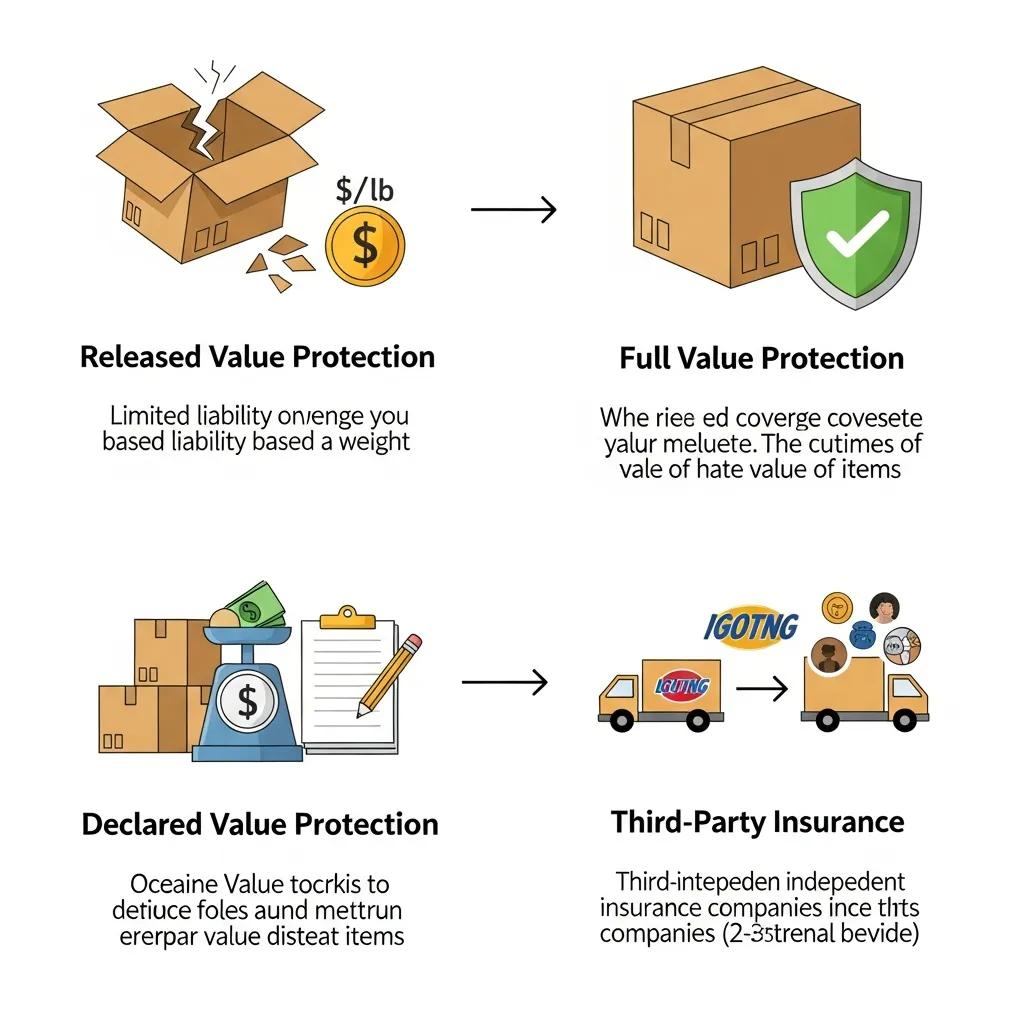
Valuation coverage comes in several common forms—Released Value Protection, Full Value Protection, Declared Value Protection, and third-party moving insurance—and each type uses a different payment mechanism and purpose. Released Value Protection limits carrier liability using a per-pound formula; Full Value Protection requires repair, replacement, or cash settlement based on depreciated or replacement cost depending on terms; Declared Value lets you set a value for the shipment that directly scales the mover’s responsibility; and third-party policies are independent insurance products that can provide replacement-cost coverage or agreed-value contracts. The right choice depends on total household worth, the number of high-value items, and whether you want coverage that mirrors replacement cost. Below is a quick comparison table that summarizes how each coverage commonly pays and its trade-offs.
Intro: The table below compares the major valuation types to help you quickly see how each pays and typical pros and cons.
| Coverage Type | How It Pays | Typical Example / Limit | Pros | Cons |
|---|---|---|---|---|
| Released Value Protection | Per-pound payout | e.g., $0.60 per pound for local moves | Low or no-cost default; simple math | Often inadequate for high-value losses |
| Full Value Protection | Repair/replace or cash settlement | Coverage up to declared or mover limits | Restores household function; better for valued items | Higher cost than released value |
| Declared Value Protection | Carrier pays up to declared value | Customer sets value for shipment | Customizable liability level | May increase moving rates |
| Third-Party Moving Insurance | Policy pays replacement or agreed value | Independent policy terms vary | Replacement cost and broader coverage | Separate premium; requires underwriting |
This comparison clarifies practical differences and leads into a focused look at released and full value options, including numeric examples you can use when estimating risk and cost. When considering these options, remember that some movers include free basic coverage amounts with upgrade paths to comprehensive protection.
What Is Released Value Protection and How Does It Work?
Released Value Protection is a default valuation that limits carrier liability by assigning a fixed per-pound payout for damaged goods, and it works by multiplying the damaged item’s weight by the mover’s per-pound rate. For example, a common carrier-level rate for local full-service moves might be $0.60 per pound, meaning a 50-pound chair would yield $30 in compensation if the mover is liable—clearly insufficient for many household items. The mechanism’s simplicity is its strength: it’s often free and automatically applied unless you choose otherwise, but it can leave gaps for high-value articles or items with replacement costs far exceeding weight-based math. If you have antiques, electronics, or valuable furniture, released value protection is likely to undercompensate, which is why many people opt to upgrade coverage or purchase supplemental insurance. Understanding this per-pound calculation is the first step toward deciding whether to accept basic coverage or seek fuller protection.
What Is Full Value Protection and What Are Its Benefits?
Full Value Protection obligates the mover to repair, replace, or provide a cash settlement that brings your item’s functionality back to its pre-loss state, and it benefits owners by aligning remedies more closely with real replacement or repair costs. Under full value, the carrier evaluates damage and offers repair or replacement when feasible; if neither is possible, a cash settlement reflecting replacement cost minus depreciation may be offered depending on the contract. This protection is best suited for moves containing expensive furniture, antiques, or electronics where per-pound math would be inadequate. While full value protection typically costs more than released value, it reduces out-of-pocket expense after a loss and often speeds settlement because the mover coordinates repair or replacement logistics. When choosing full value, be sure to document condition pre-move and declare high-value items so coverage and premiums properly reflect your risk.
What Are Your Rights and Mover Liability Options During a Move?
As a consignor you have statutory and contractual rights regarding mover liability; movers must offer valuation coverage options and disclose terms so you can choose the protection that matches your needs. For interstate moves, federal rules require carriers to provide written descriptions of valuation options and to allow you to choose coverage; intrastate rules vary by state but commonly require similar disclosures. Knowing your rights helps you demand proper documentation, request copies of the bill of lading showing selected valuation, and insist on timelines for claims and responses. Below is a numbered list of core rights every shipper should expect before and during a move to assert control over coverage and dispute resolution.
Key customer rights to expect and assert:
- You have the right to receive clear, written options for valuation coverage and to select released or full value.
- You have the right to obtain a written bill of lading that reflects the coverage you chose and any declared value.
- You have the right to timely notice of claims procedures and deadlines for reporting loss or damage.
These rights form the foundation for asserting a claim or requesting documentation, and knowing them leads to understanding the specific federal and state rules that govern mover liability.
What Federal and State Regulations Govern Mover Liability?
Federal agencies regulate interstate moving practices while states govern intrastate moves, and together they create a framework that determines disclosure duties, valuation offerings, and claims timelines. For interstate shipments, federal rules require carriers to provide written valuation options and explanations at booking and to include chosen coverage on the bill of lading; state-level rules vary and may impose additional consumer protections or minimum disclosure standards. Being aware of both frameworks helps you understand when federal protections apply and when to consult state agencies or regulators for intrastate disputes. Movers that advertise licensing and insurance compliance offer an extra layer of assurance because licensing indicates regulatory oversight and insurance provides financial backing for liabilities, so verifying a mover’s credentials can be a practical step before you finalize a booking.
What Are the Limitations and Exclusions of Mover Liability?
Mover liability commonly excludes items you packed yourself, certain valuables left in personal vehicles, hazardous materials, and damage from normal wear or inherent vice, and these exclusions mean some losses require alternative coverage strategies. For example, self-packed boxes often shift responsibility to the owner unless the mover packaged the item, and many carriers limit liability for jewelry, currency, or fragile artwork unless specifically declared and documented. Understanding exclusions lets you mitigate gaps via declared value choices, third-party insurance, or professional crating for sensitive items. Practical steps include creating a list of high-risk items, declaring them prior to shipment if required, and using specialized services like crating or professional packing to ensure coverage applies and claims are more likely to succeed.
How Can You Protect Valuables and Fragile Items During Your Move?
Protecting valuables begins with three parallel strategies: professional packing and crating for fragile or high-value goods, accurate inventory and photographic documentation, and selecting valuation coverage that matches item replacement cost. Professional packers use materials and techniques—double-boxing, acid-free padding for artwork, custom crates for sculptures—that materially reduce transit damage. In addition, precise inventories and time-stamped photos create the evidence trail necessary for claims. A practical checklist and a quick table below outline recommended protections for common high-value item types so you can match packing and coverage to item sensitivity.
Intro: The table below maps common high-value item categories to recommended protection and practical notes to help you decide when to request professional services or declare value.
| Item Type | Recommended Protection (packing/crating/declared value) | Notes / Limitations |
|---|---|---|
| Fine art & paintings | Custom crating + climate control + declared value | Document provenance; insurer may require certificates |
| Antiques & heirlooms | Professional packing + full value or declared value | Repair/replacement may be limited by availability |
| Electronics | Original packaging or antistatic wrap + insurance declaration | Backups of data recommended; fragile internal components |
| Jewelry & watches | Keep with owner or insure separately; declare value | Often excluded from basic mover liability |
This practical mapping clarifies which items typically require extra services or separate insurance, and it transitions into more detail about professional packing benefits and documentation techniques.
How Do Professional Packing and Crating Services Enhance Protection?
Professional packing and crating enhance protection by applying industry-standard materials, measured packing densities, and custom enclosures that absorb shock, control moisture, and prevent movement in transit. Pack professionals segment items by fragility and use materials such as multilayer corrugated boxes, foam-in-place crating, and vibration-absorbing inserts for electronics and artwork. These methods reduce handling damage and often improve claims outcomes because professional packing demonstrates reasonable care, which can influence carrier assessment of liability. Choosing professional services for high-value items also simplifies logistics: the mover can coordinate secure handling, climate-controlled transport, and timely delivery in ways self-packing cannot replicate. Documenting that items were professionally packed supports coverage eligibility and smooths the claims process if something goes wrong.
Why Is Inventory and Documentation Important for Protection?
Inventory and documentation are the evidentiary backbone of any successful claim because they establish pre-move condition, item value, and chain of custody; without them, settlements are slower and often smaller. Effective documentation includes a detailed written inventory, high-resolution photos or video of items and serial numbers, receipts or appraisals for high-value pieces, and timestamps that prove condition immediately before the move. This evidence allows adjusters to assess damage relative to documented condition and supports repair or replacement valuations. Maintaining organized digital and physical copies of inventories accelerates claims and reduces disputes, which is why creating a consistent documentation workflow is as important as selecting the right valuation coverage.
How Do You File a Moving Insurance Claim? Step-by-Step Guide
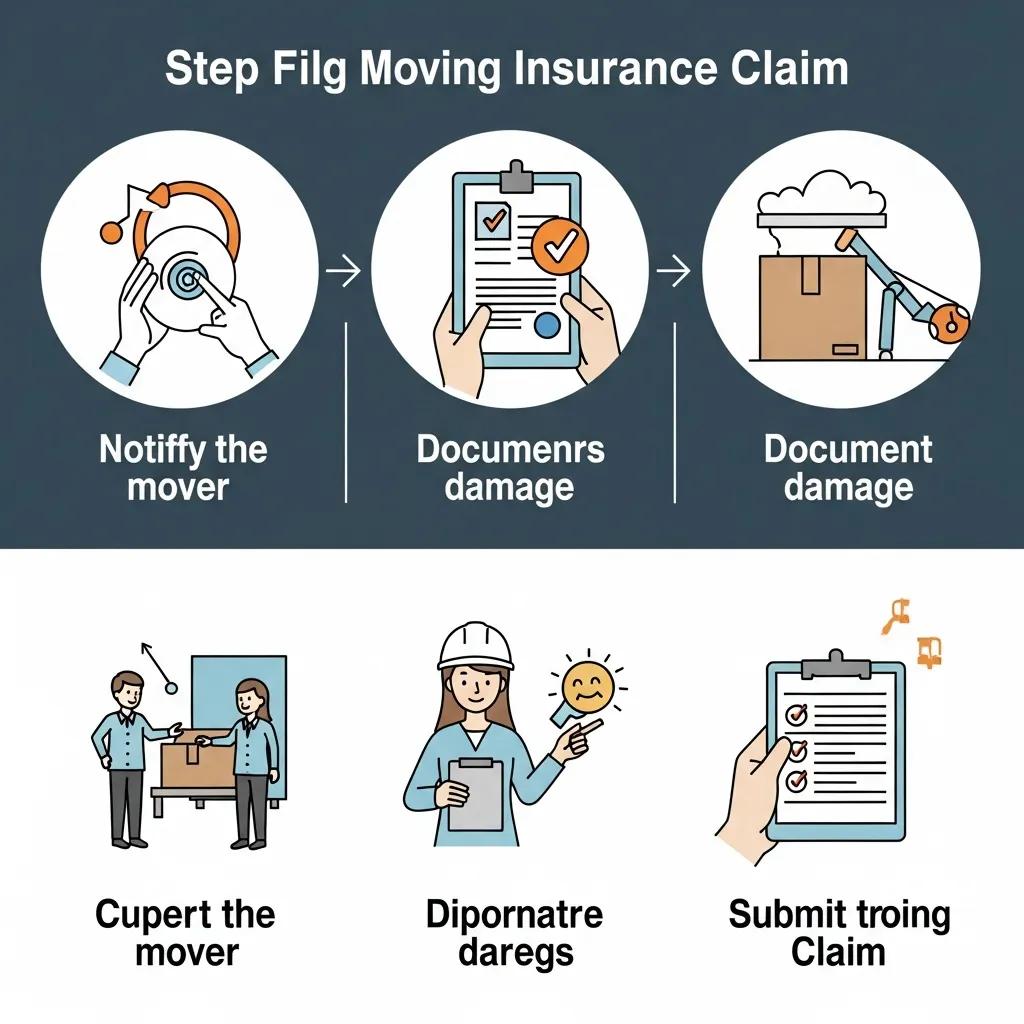
Filing a moving insurance claim follows a chronological sequence: notify the carrier promptly, secure and document damage, submit a written claim with required evidence, cooperate with inspections, and follow claim timelines to resolution. Prompt notification preserves adjuster rights and avoids deadline problems, while detailed documentation increases the probability of full settlement. The following numbered steps provide a concise, actionable workflow you can follow as soon as damage is discovered.
- Notify the mover immediately: Report visible damage or loss at delivery and request a damage report entry on the bill of lading.
- Document the damage: Take dated photos and video of damaged items, packaging, and the delivery condition.
- Gather supporting evidence: Collect receipts, appraisals, inventory lists, and repair estimates to substantiate value.
- Submit a written claim: File the mover’s written claim form within required timeframes, attaching documentation.
- Cooperate with the adjuster: Provide access for inspection and respond to requests promptly to avoid delays.
This step-by-step process sets clear expectations for timing and actions, and understanding these steps leads naturally into what documentation will be required to maximize claim success.
When and How Should You File a Claim?
You should file a claim as soon as damage or loss is discovered, following any immediate notification requirements on delivery and within written deadlines specified by the mover or governing regulation. Initial contact typically occurs at delivery—note visible damage on the bill of lading and request a copy—then file a written claim within the mover’s stated window, which may be days or months depending on the jurisdiction and service type. Communication channels can include written forms, email, or phone follow-ups, but always secure a written record. Sample language for an initial notification might state the items damaged, the date of delivery, and a request for the carrier’s claims form; keeping a paper trail reduces ambiguity and speeds adjudication.
After these general steps, many professional movers streamline resolutions through an easy claims process and can provide a Certificate of Insurance (COI) after a reservation, which helps verify coverage details. If you work with a mover that advertises an easy claims workflow and provides a COI at booking, provide that documentation with your claim to show coverage terms and speed verification. This practical availability of a COI and a clear claims workflow can reduce friction and make a real difference in how quickly you receive compensation or repair arrangements.
What Documentation Is Required for a Successful Claim?
Successful claims require a set of core documents that substantiate ownership, condition, and repair needs: the bill of lading, inventory list, dated photos/video, original receipts or appraisals, and repair estimates or invoices. The bill of lading proves the contractual terms and selected valuation coverage; the inventory and images establish pre-move condition; receipts or appraisals support monetary value; and repair estimates provide the basis for settlement amounts. Organize these documents in a clear packet and submit them with your written claim form to accelerate review. Strong, contemporaneous documentation reduces disputes and improves the likelihood of receiving a settlement close to replacement value.
What Factors Affect Moving Insurance Cost and How Is It Calculated?
Moving insurance cost is influenced primarily by declared value, the total valuation of your shipment, distance, and the type and fragility of items—each factor directly changes insurer exposure and therefore the premium. Declared value increases the mover’s or insurer’s liability dollar-for-dollar, meaning higher declared totals usually translate to higher fees; distance affects logistical risk and exposure time; fragile or high-value items raise underwriting concerns; and professional packing can reduce premiums by mitigating damage risk. The sections below explain declared value mechanics and other cost drivers in practical terms and include a compact table showing typical factor impacts and examples.
Intro: The table below explains how major factors affect insurance cost and gives an example of impact to help estimate potential premiums.
| Factor | How It Affects Cost | Example Impact |
|---|---|---|
| Declared value | Directly increases liability and premium | Doubling declared value often raises premium proportionally |
| Distance | Longer moves increase exposure and handling | Cross-country moves cost more than local moves |
| Item type & fragility | High-value/fragile items increase premiums | Antique collections raise rates vs standard furniture |
| Packing & services | Professional packing can lower risk-based premiums | Crating art may reduce insurance surcharge |
This factor mapping clarifies what drives price and prepares you for valuation decisions; next we examine declared value mechanics with examples.
How Does the Value of Your Belongings Influence Insurance Premiums?
The declared or total valuation establishes the ceiling of carrier or insurer exposure, and premiums usually scale with that exposure so that higher declared values produce higher costs. For example, if you declare a shipment worth $50,000, the carrier or insurer prices coverage to reflect potential replacement or settlement exposure, whereas declaring $10,000 would cost less. Accurately valuing belongings requires realistic replacement estimates and consideration of antiques or custom pieces that may have higher replacement difficulty. Advice: perform a room-by-room inventory with estimates and appraisals for high-value items to set declared value levels that match your risk tolerance without unnecessarily inflating premiums.
What Other Factors Impact Moving Insurance Costs?
Other cost drivers include service level (full-service moves versus labor-only), deductible selection, seasonality and demand, and whether you use a mover’s valuation or third-party insurance; each can raise or lower the final premium. Full-service, white-glove moves often command higher insurance rates because movers handle more items and assume more responsibility, while labor-only moves that you load may shift risk to you and reduce mover valuation costs. Deductible choices also trade upfront cost for lower premiums—higher deductibles reduce premium but increase out-of-pocket risk. Mitigation strategies include selectively declaring only items above a threshold, using professional packing to lower risk ratings, and comparing third-party policies for broader replacement coverage when needed.
- Select coverage that aligns with replacement cost for high-value items.
- Use professional packing or crating to reduce premium variability.
- Compare mover valuation and third-party insurance for cost-effectiveness.
These strategies help balance cost and protection so you get appropriate coverage for your move while managing premiums sensibly.
Beyond standard moving and packing, many movers also offer specialized services. For instance, if you’re looking to declutter before your move, consider professional junk removal services to streamline the process and reduce the volume of items to be transported.